Over the past two weeks, coordinated videos across Facebook, Instagram, and TikTok have falsely claimed that the United States government is preparing for a mandatory, three-month electrical blackout. Several high-engagement clips featured artificial intelligence-generated deepfakes of President Donald Trump purportedly announcing that "power in America will be down for 90 days."
Fact-checking investigations by Snopes confirmed that the viral footage was digitally manipulated from authentic public appearances, including a November 2 speech near the Lincoln Memorial and a November 7 press gaggle outside the White House. Neither appearance involved discussions of grid shutdowns.
Instead, fraudulent accounts paired the synthetic audio with financial solicitations. Scammers urged viewers to purchase unregulated digital tokens—including "United States Power Reserve" (USPR) and "United States Asset Reserve" (USAR)—under the false claim that token holders would retain electricity access during the non-existent outage. No federal department, regional utility, or grid operator has issued any notice regarding an impending civilian blackout.
Unpacking the Pentagon’s Real 'FORTRESS America' Plan
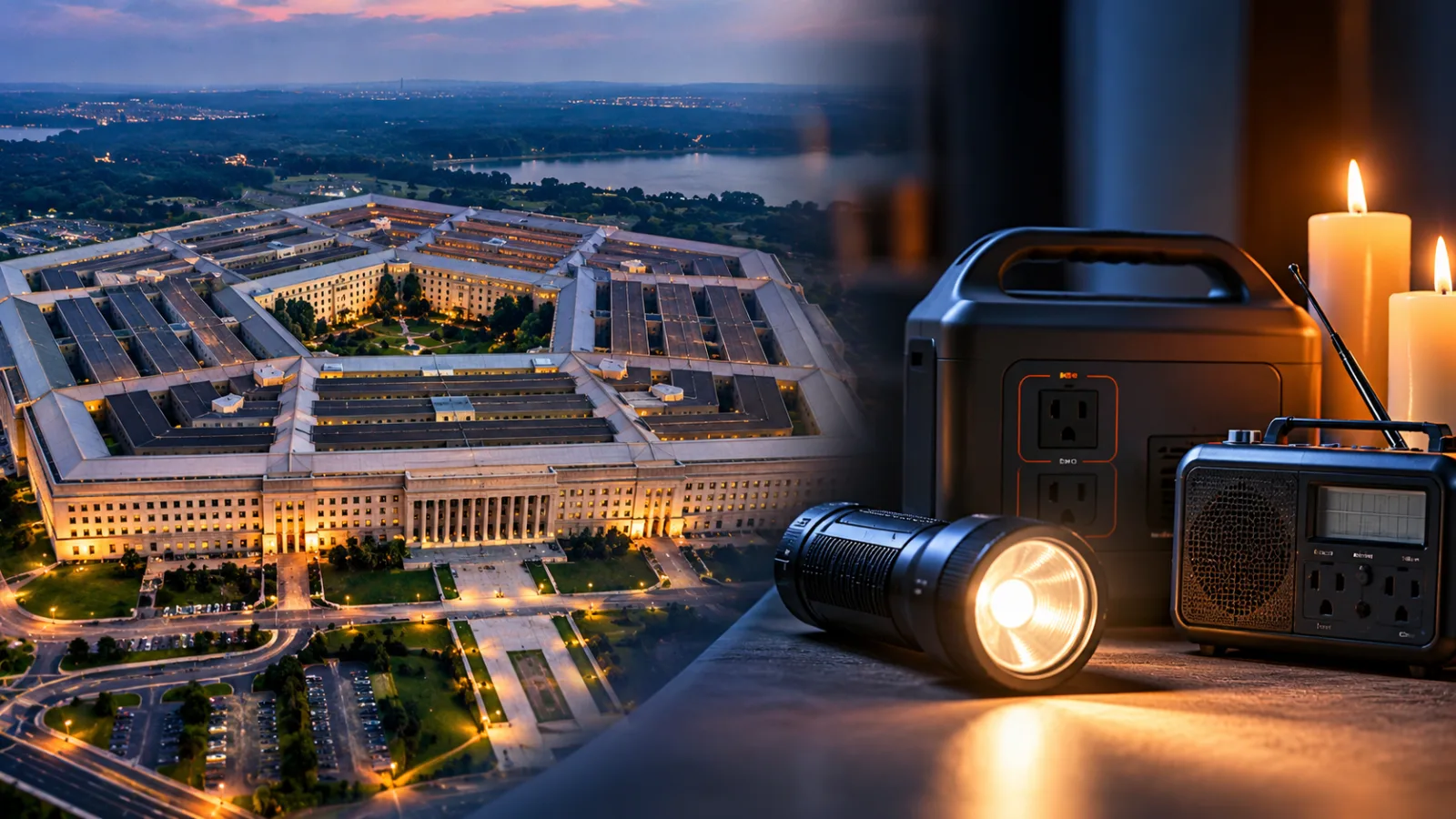
The viral claims stem from a distorted interpretation of a Department of Defense resilience program announced on September 30 by Defense Secretary Pete Hegseth during an address at Marine Corps Base Quantico. The strategy, titled FORTRESS America (Federal Operations for Resilience, Troop Resources, Energy, Supply and Survivability), aims to shield strategic military installations from external attacks and logistical disruption.
According to internal Pentagon planning documents first reported by Fox News Digital, the initiative sets an operational planning target: equipping major domestic military bases to sustain essential functions off-grid for at least 90 days during a national emergency.
The plan outlines investments in base microgrids, high-capacity commercial battery storage, portable nuclear reactors, and redundant supply pathways. Pentagon Chief Spokesperson Sean Parnell explained the operational rationale, noting that modern geopolitical conflict increasingly targets critical civilian infrastructure.
"We don't want to rely on standard civilian municipal infrastructure to run our national defense. We just simply can't. It's an intolerable risk," Parnell said, adding that "power is combat now."
Military Readiness Meets Civilian Grid Vulnerabilities
While the rumor of a civilian blackout is false, the military program has sparked debate over national infrastructure transparency. In a commentary published November 13 in The Hill, retired Lieutenant General Russel L. Honoré—who directed federal military relief operations following Hurricane Katrina—raised concerns that civilian emergency managers remain disconnected from Pentagon contingency planning.
Honoré noted that hostile state actors possess sophisticated cyber tools capable of probing domestic infrastructure, arguing that if threat indicators justify preparing military bases for a 90-day disruption, federal leaders should coordinate closely with civilian authorities.
"If American civilians are at risk, they have a right to know," Honoré wrote. "Just as important for managing the threat, America’s governors and mayors must be read in to the situation to begin planning for the worst."
What Americans Need to Know About Real Grid Reliability
Energy security experts stress that the North American electrical grid operates across multiple decentralized regional interconnections, meaning an involuntary, simultaneous nationwide outage lasting 90 days is technically implausible under normal operational parameters.
While federal emergency agencies like FEMA consistently encourage families to maintain standard emergency supplies for severe weather events—including several days of water, non-perishable food, and essential medications—there is no scheduled or anticipated federal grid shutdown. Officials urge the public to consult local utility providers and official emergency channels rather than unverified social media claims.