Makinde Sues Otti Over ₦200 Million Campaign Billboard Fee in Abia
The legal battle could test how far states can regulate political advertising during election campaigns.
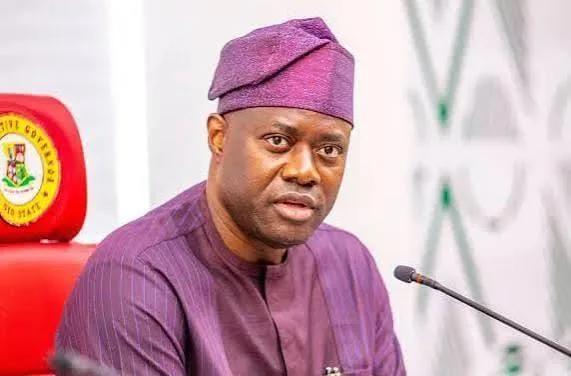
A fresh legal dispute has emerged ahead of Nigeria's 2027 presidential election after Oyo State Governor and Allied Peoples Movement (APM) presidential candidate, Seyi Makinde, filed a lawsuit challenging an alleged ₦200 million billboard permit fee imposed on presidential candidates in Abia State.
The suit, marked HC/214/2026, filed through their lawyer, Musibau Adetunbi, SAN, before the Abia State High Court in Umuahia, names Abia State Governor Alex Otti, the state's Attorney-General, the Abia State Signage and Advertisement Agency (ABSAA) and the Abia State House of Assembly as defendants. Court documents show the case was instituted on September 17, with the plaintiffs asking the court to invalidate the disputed campaign advertising regulations.
At the centre of the case is a fee schedule introduced by ABSAA, which allegedly requires presidential candidates to pay ₦200 million before displaying campaign billboards and outdoor advertisements across Abia State. The regulations also reportedly prescribe separate charges for governorship, senatorial and legislative candidates.
Makinde and the APM argue that the fee is unconstitutional and inconsistent with provisions of the Electoral Act 2026, maintaining that political campaign regulation falls primarily within the constitutional authority of the Independent National Electoral Commission (INEC). They are asking the court to declare the fee null and void and to permanently restrain the Abia Government from enforcing it or interfering with their campaign materials.
According to the plaintiffs, the disputed charge goes beyond ordinary signage regulation and effectively creates a financial barrier that could disadvantage opposition candidates during the election. They contend that Section 99 of the Electoral Act prohibits the use of state agencies in ways that favour or disadvantage any political party or candidate.
The lawsuit also raises concerns about campaign spending limits. Makinde's legal team argues that the Electoral Act already caps presidential campaign expenditure nationwide, warning that if multiple states adopted similar billboard fees, a substantial portion of a candidate's lawful campaign budget could be consumed by advertising permits alone before accounting for logistics, media, security and other campaign costs.
While the plaintiffs acknowledge that states possess powers to regulate outdoor advertising within their territories, they insist those powers cannot override federal electoral legislation or undermine the constitutional principle of a level playing field during elections. That constitutional question is expected to become one of the key issues the court will determine.
As of the latest publicly available court filings, Abia State Government had not issued a substantive court response to the claims contained in the suit. The allegations remain the position of the plaintiffs and will ultimately be tested through judicial proceedings.
The case is likely to attract national attention because it reaches beyond a dispute over billboards. Its outcome could clarify the balance between state regulatory authority and federal electoral law, setting an important precedent for how political campaign advertising is managed across Nigeria in the 2027 election season.
More on Law/Legal

Law/Legal
Brad Pitt Seeks Court Order as Miraval Legal Battle with Angelina Jolie Deepens
5 Aug 2026
Law/Legal
Grindr Agrees to £26 Million Settlement Over UK Privacy Lawsuit
8 Sept 2026
Law/Legal
Billionaire John Overdeck Faces $6.2bn Divorce Battle as Wife Seeks Share of Two Sigma Fortune
18 Aug 2026
Law/Legal
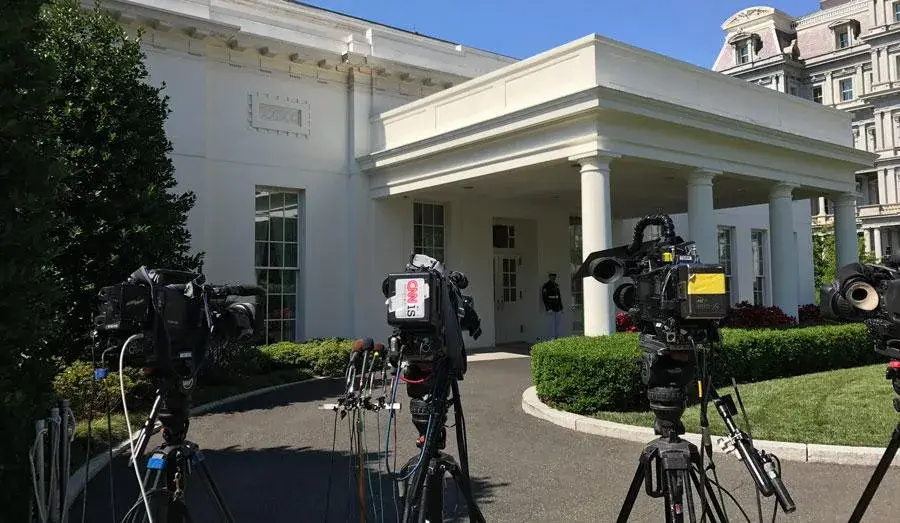
CNN, MSNBC and Politico File Emergency First Amendment Lawsuit Against Trump
21 Sept 2026
Law/Legal
Supreme Court Blocks Trump's Mail-In Voting Plan Ahead of US Midterm Elections
15 Sept 2026
Partner with Follow Global Trends
Display banners, sponsored stories and founder spotlights.
You may also like
Law/Legal
Offensive Livestream Triggers Legal Action in UAE
5 Aug 2026
Law/Legal
US Advocacy Firm Files $57m Suit Against Tinubu, Nigeria and Fani-Kayode
6 Oct 2026
Law/Legal
ICC Tribunal Dismisses Sunrise Power’s $2.35 Billion Claim Against Nigeria
18 Sept 2026
Law/Legal
Kosovo’s Former President Hashim Thaçi Sentenced to 25 Years in War Crimes Case
16 Sept 2026

Law/Legal
Paris Court Awards Kim Kardashian €1 in Landmark 2016 Robbery Case
16 Sept 2026

Law/Legal
UK Court Grants Poco Lee Bail Ahead of Tuesday Hearing
14 Sept 2026