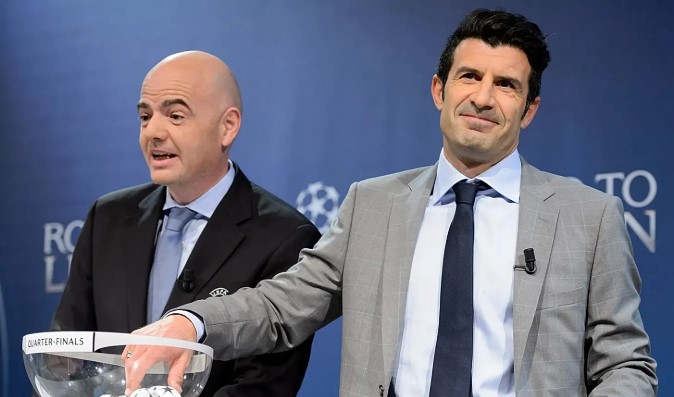
The pressure on FIFA President Gianni Infantino has intensified after Portuguese football legend Luis Figo publicly called for his resignation, accusing the FIFA chief of betraying the trust of the global football community and declaring that it is "too late to save his dignity, but not too late to save football."
Figo's intervention marks one of the strongest criticisms yet from a prominent former player and senior football figure. Writing in a sharply worded opinion piece, the former Ballon d'Or winner said the recent controversy surrounding FIFA's abandoned proposal to sell a minority stake in the commercial rights to the FIFA World Cup represented one of the most troubling episodes he had witnessed in the sport.
"I could write 10,000 words on the problems at FIFA," Figo wrote. "But the solution needs only three: Infantino must go." He accused the FIFA president of placing personal and commercial interests ahead of football's long-term integrity, arguing that the office of FIFA president had been diminished rather than strengthened under his leadership.
The controversy stems from FIFA's now-withdrawn plan to establish a commercial entity that would have sold a 20 percent stake in the revenues generated by the FIFA World Cup and other major competitions to private investors. The proposal triggered fierce opposition from several football associations and confederations, including UEFA, over concerns about transparency, governance and the potential commercialisation of the sport's most valuable assets. Facing mounting resistance, FIFA abandoned the initiative.
Figo's criticism comes at a particularly sensitive moment for Infantino. In recent days, the Football Association of Wales became the first national federation to withdraw its backing for his expected re-election campaign, while reports suggest that other football bodies are reassessing their positions ahead of the next FIFA presidential election. The growing dissent has transformed what was once expected to be a routine re-election bid into a more uncertain political contest.
The Portuguese football icon's remarks carry particular weight because of his long association with football governance. A former FIFA presidential candidate in 2015 and a UEFA adviser since 2017, Figo was among those who initially supported leadership reforms following the Sepp Blatter era. His latest comments therefore represent a significant reversal from earlier hopes that FIFA would emerge from its previous governance scandals with stronger accountability and greater transparency.
Infantino has not publicly responded in detail to Figo's latest criticism. However, FIFA has maintained that its commercial initiatives are designed to generate additional revenue that can be reinvested in football development around the world. The governing body has also highlighted significant achievements during Infantino's tenure, including expanded investment in women's football, increased funding for member associations and the successful organisation of recent international tournaments.
The dispute has sparked broader debate about the future direction of world football. Supporters of governance reform argue that FIFA must strengthen transparency, consultation and financial accountability as commercial opportunities continue to grow. Others caution that expanding the sport globally requires innovative funding models, provided they are implemented with broad stakeholder support.
For readers of FollowGlobalTrends.com, the latest developments illustrate that modern football is increasingly shaped not only by performances on the pitch but also by decisions in the boardroom. As billions of dollars flow through the global game, questions of governance, commercial strategy and institutional trust have become just as important as trophies and tournaments. Whether Gianni Infantino weathers the growing storm or faces a serious leadership challenge, the outcome could influence the future governance of world football for years to come.