
Indonesia Volcano Eruption Strands 150,000 Passengers as Eight Airports Close
A powerful eruption of Mount Anak Krakatau has paralysed air travel across western Indonesia, leaving more than 150,000 passengers stranded as volcanic ash shuts down airports.
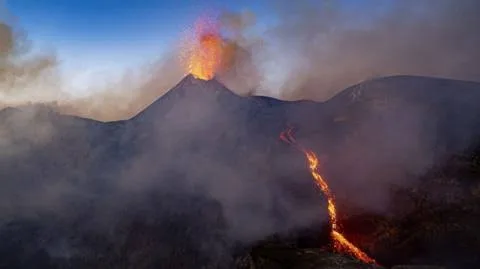
More than 150,000 airline passengers have been stranded across Indonesia after the eruption of Mount Anak Krakatau forced authorities to close eight airports, triggering one of Southeast Asia’s biggest aviation disruptions in recent years.
The volcano, located in the Sunda Strait between Java and Sumatra, erupted multiple times over the weekend, sending towering columns of ash and lava high into the atmosphere. Indonesia’s Geological Agency said the strongest ash plume rose to about 15 kilometres (50,000 feet), drifting across western Indonesia and into airspace serving the country’s busiest aviation hubs.
The ash cloud prompted the temporary suspension of operations at Jakarta’s Soekarno-Hatta International Airport alongside seven other airports in Java and Sumatra. Hundreds of domestic and international flights were cancelled, with services to destinations including Singapore, Kuala Lumpur, Sydney and Doha among those affected.
Scenes of long queues unfolded inside airport terminals as travellers scrambled to rebook journeys, request refunds and find alternative routes. Indonesian transport authorities said more than 1,500 flights were disrupted, while airlines including Singapore Airlines, AirAsia and several regional carriers cancelled or delayed services because volcanic ash poses a serious risk to aircraft engines and navigation systems.
Despite the widespread travel chaos, officials stressed that the eruption has not caused any reported fatalities. The country’s volcanology agency has maintained Anak Krakatau at Alert Level 3, the second-highest level in Indonesia’s warning system — and has ordered residents and visitors to stay at least three kilometres away from the active crater. Authorities also said there is currently no indication that the eruption will trigger a tsunami.
The eruption has disrupted daily life beyond aviation. Schools in some affected areas shifted to online learning, fishing activities were suspended in parts of the Sunda Strait, and health officials distributed protective masks as ash fell across communities in Banten, Lampung and parts of Greater Jakarta. Emergency agencies are also considering weather-modification measures to encourage rainfall and help clear volcanic ash from the atmosphere.
Anak Krakatau, whose name means “Child of Krakatoa”, emerged from the sea after the catastrophic 1883 eruption of Krakatoa, one of the deadliest volcanic events in recorded history. The volcano remains one of Indonesia’s most closely monitored because of its frequent activity and its role in the devastating 2018 eruption, when a collapse of its volcanic flank generated a tsunami that killed more than 400 people.
Indonesia sits on the Pacific Ring of Fire and is home to more than 120 active volcanoes, making eruptions a recurring reality for millions of people. While this latest event has so far been measured more by economic and travel disruption than by loss of life, it underscores how quickly volcanic activity can ripple across regional transport networks, affecting travellers, businesses and neighbouring countries far beyond the eruption zone.
More on Trending

Trending
Nicki Minaj Follows Peter Obi on X After Amplifying His Niger State Security Message
19 Sept 2026

Trending
Jazz legend Cassandra Wilson dies peacefully at 70, family confirms
3 Sept 2026

Trending
Lionel Richie Under Medical Care Following Onstage Health Scare in St. Louis
31 Aug 2026

Trending
Royal Caribbean Passenger Rescued After 20 Hours at Sea
15 Oct 2026

Trending
Harry and Meghan Back in UK Spotlight With Visits to Youth and Food Charities
15 Oct 2026
Partner with Follow Global Trends
Display banners, sponsored stories and founder spotlights.
You may also like

Trending
Lady Gaga Welcomes First Child With Fiancé Michael Polansky
12 Sept 2026
Trending
President Trump Claims ‘The Moon Is Ours,’ Igniting Global Space Debate
7 Sept 2026

Trending
Missing Nigerian Woman Saratu Jibo Found Safe in Doha After Airport Scare
7 Sept 2026

Trending
UK Coroner Links Nigerian Influencer’s Death to Cosmetic Procedure in Thailand
6 Sept 2026

Trending
Trump Says He’s Naming Projects After Himself Because ‘Nobody Will’ Later
6 Sept 2026
Trending
Two Workers Rescued Alive from Nepal Tunnel After Nine Days Trapped by Floods
4 Sept 2026