Enugu political events took center stage on Thursday, October 29, 2026, as three prominent political figures held separate high-stakes engagements across the state capital. The three events brought governance accountability, consultative policy formulation, and opposition politics into sharp public focus ahead of the 2027 general elections.
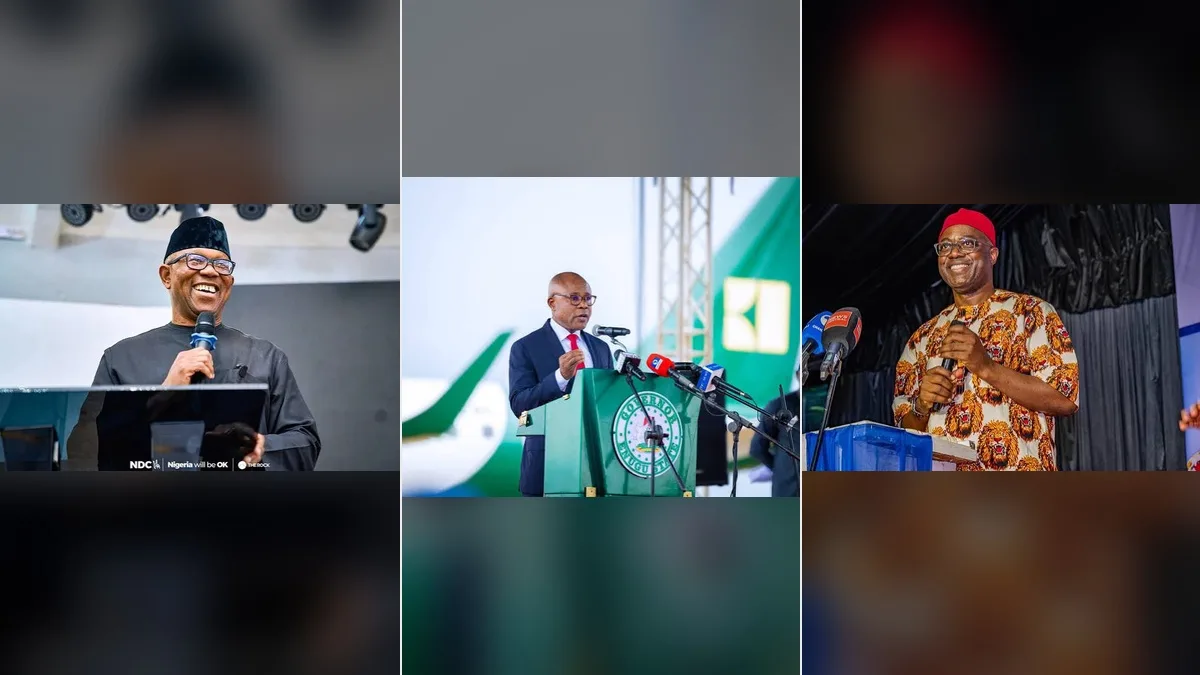
The simultaneous gatherings featured Governor Peter Ndubuisi Mbah of the All Progressives Congress (APC), Oyo State Governor and Allied Peoples Movement (APM) presidential candidate Seyi Makinde, and former Anambra State Governor and Nigeria Democratic Congress (NDC) presidential candidate Peter Obi. Although each forum served a distinct institutional and electoral purpose, their staging on the exact same day reflected the accelerating momentum of national political organizing in the South-East.
Mbah Presents Governance Scorecard at Godfrey Okoye University
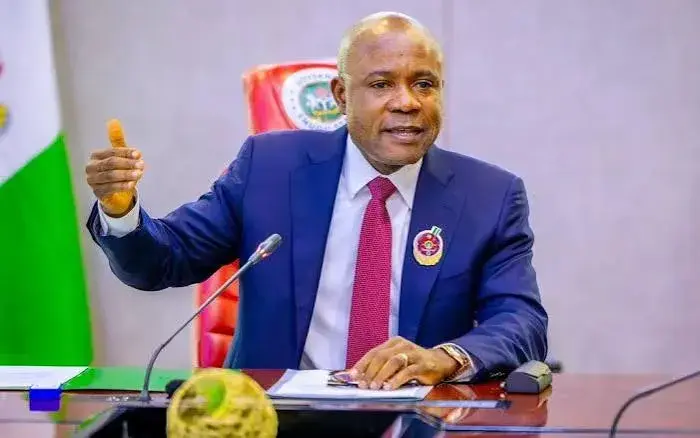
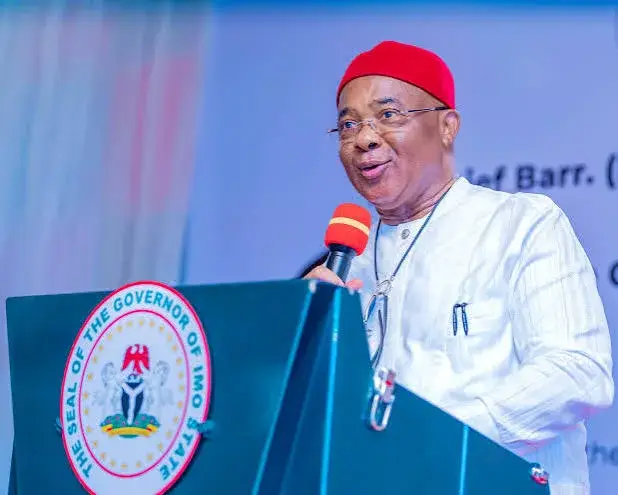
Governor Peter Mbah held his engagement at the Peter Mbah Law Auditorium of Godfrey Okoye University in Thinkers Corner, Enugu. Operating under the theme "Our Commitment to Ndi Enugu: The Journey So Far," the session was organized as an institutional manifesto performance update rather than a new campaign launch, giving the administration an official platform to review its record since assuming office in May 2023 against the pledges outlined during the 2022 campaign cycle.
Addressing participants, Mbah reflected on the severe socioeconomic and security headwinds that confronted the state when his government took office, noting the disruption caused by illegal sit-at-home enforcements, deteriorating public infrastructure, and diminished investor confidence. He outlined reported interventions across internal security, education, primary and tertiary healthcare, municipal transportation, tourism, and mechanized agriculture, while reaffirming his target of expanding the state's gross domestic product from approximately $4.4 billion to $30 billion.
The governor grounded his presentation in the state’s Citizens Charter, introduced through Executive Order 001 to mandate periodic public reporting on government targets. Acknowledging that substantial structural challenges persist across rural and urban communities, Mbah called for sustained citizen collaboration and civic vigilance, framing administrative transparency as the baseline for long-term regional development.
Makinde Concludes Nationwide APM Consultations at KOBB Civic Centre
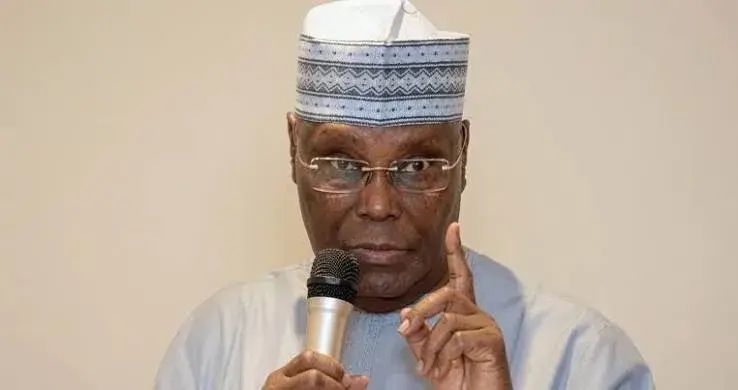
Across town at the KOBB Civic Centre, Seyi Makinde led the South-East zonal town hall meeting of the Allied Peoples Movement, marking the final stage of the party’s six-zone national listening tour. The meeting represented a participatory approach to drafting the party's formal platform, with the campaign gathering grassroots feedback directly from civic stakeholders rather than relying exclusively on internal policy drafting committees.
Makinde announced that citizen recommendations compiled across all geopolitical zones would form the foundation of the party’s official manifesto, scheduled for formal public presentation on November 4, 2026. He articulated his campaign’s "Reset Agenda" around four core pillars: revitalizing the national economy, overhauling the national security architecture, reforming the public education system, and restructuring the socio-political environment to rebuild public trust between government institutions and citizens.
Speaking directly to regional voter sentiment, the Oyo State governor appealed to the electorate to reject ethnic and religious calculations in the upcoming 2027 contest. While explicitly acknowledging Peter Obi’s deep political support across the South-East, Makinde urged voters to evaluate presidential tickets on systemic solutions and leadership capacity rather than regional sentiment. The session also featured detailed policy presentations from APM National Chairman Yusuf Dantalle and vice-presidential candidate Lawal Daura, who fielded questions on regional security, industrial power supply, and youth employment.
Obi and Kwankwaso Address NDC Town Hall Following Venue Clearance
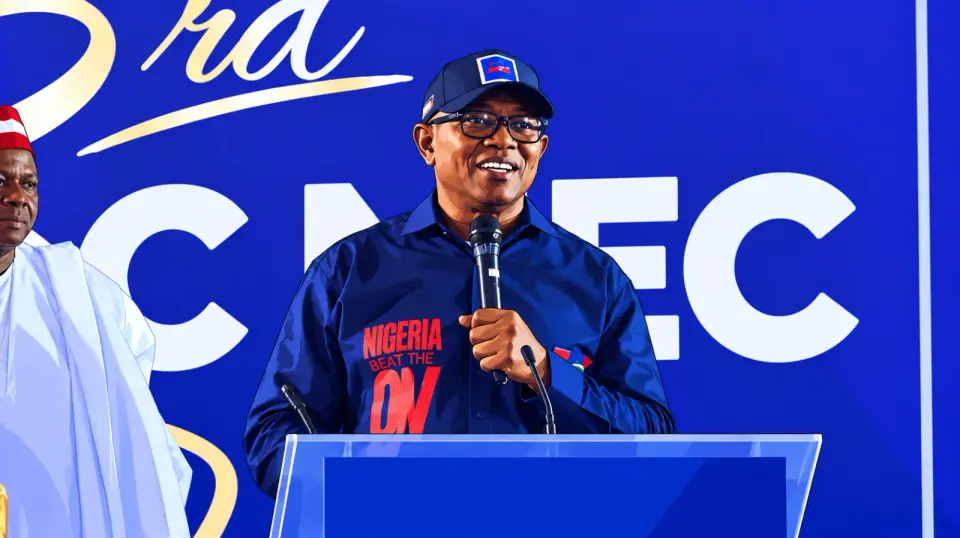
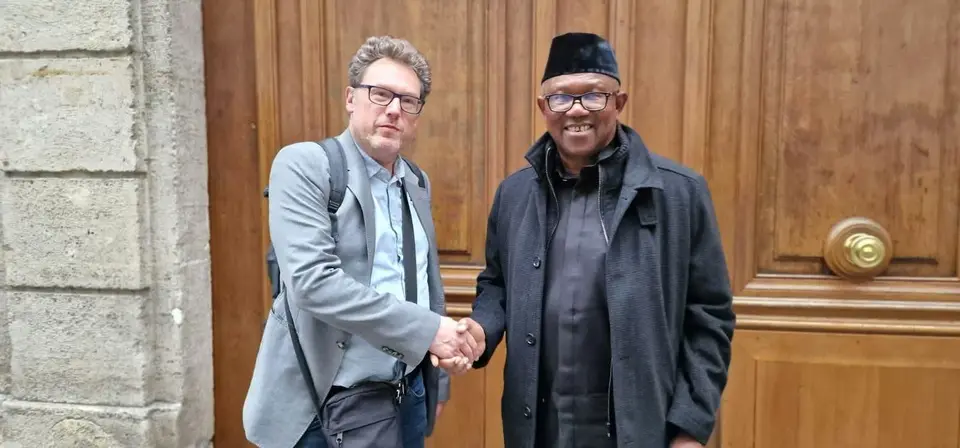
Simultaneously, Peter Obi and his vice-presidential running mate, Senator Rabiu Musa Kwankwaso, convened an NDC town hall meeting at the Amadeo Event Centre at Ebeano Tunnel Road, concluding an event that had faced administrative uncertainty in the preceding twenty-four hours.
The gathering was initially thrown into doubt after facility managers reportedly rescinded access to the hall, prompting allegations of administrative interference from NDC representatives who claimed state authorities had exerted pressure on private venues to stall opposition organizing. Sampson Ukwu, media aide to Christian Chinyeaka Ohaa, the NDC governorship flagbearer in Enugu State, publicly accused the state government of orchestrating the cancellation. Governor Mbah swiftly rejected the claim, characterizing it as unfounded and maintaining that the state government played no role in the facility’s commercial operations.
Management at Amadeo Event Centre subsequently issued a formal clarification, stating that the facility had originally been contracted by the Nigeria Institute of Healthcare Givers and Medical Social Work Practitioners for an academic and professional assembly. Management explained that when organizers began hanging partisan political banners and campaign insignia, the booking was initially stopped for violating the contract terms. The facility ultimately permitted the town hall to proceed as a youth engagement forum to preserve public peace, explicitly stating that it acted independently without state directives.
Addressing the hall, Obi directed pointed criticism at the federal administration, challenging President Bola Tinubu to interact directly with citizens through regular press conferences and provide a comprehensive accounting of government stewardship before soliciting a second term in office. Obi raised detailed concerns regarding mounting public debt obligations, national revenue collection, and fiscal management, asserting that the public requires full disclosure regarding how borrowed capital and state revenues have been deployed.
Strategic Competition and Democratic Space Ahead of 2027
The convergence of three distinct political events across Enugu underscored three separate dimensions of the Nigerian political process: an incumbent state chief executive accounting for executive actions, a presidential hopeful gathering civic testimony for his policy platform, and an opposition presidential ticket mobilizing regional voter strongholds while scrutinizing federal governance.
Enugu's central position within the South-East makes it a focal point for competing national coalitions seeking structural footholds in the region. With Mbah operating within the APC, Makinde building an alternative vehicle through the APM, and Obi maintaining active grassroots structures under the NDC, the day’s activities illustrated that political competition in the zone remains pluralistic rather than monolithic.
As campaign structures expand ahead of 2027, the regional political space is increasingly serving as an arena for contrasting administrative models and national priorities. The capacity of varied political organizations to assemble peacefully, communicate their agendas, and interface with voters represents a vital test of institutional health, while public scrutiny surrounding fair access to event venues and open political assembly remains central to sustaining a balanced civic environment.