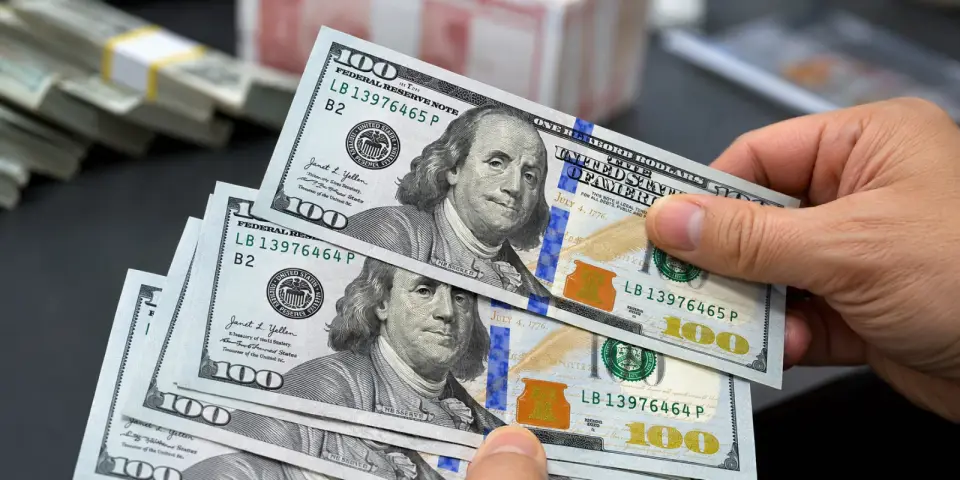
The Chinese yuan edges higher against the US dollar in Asian trading, supported by solid trade data and an adjusted official exchange rate benchmark.
On Thursday, the onshore yuan climbed approximately 0.1 percent to trade at 6.6684 per dollar, rebounding from an intraday low of 6.6718. The modest advance followed an official decision by the People’s Bank of China (PBOC) to lift its daily central parity rate, signaling regulatory intent to maintain currency stability.
However, broader foreign exchange markets kept appreciation in check as international investors continued to favor the US dollar.
Central Bank Midpoint Guides Currency Band
The currency’s upward movement was triggered prior to the market open when the PBOC set its daily midpoint fixing at 6.7174 per dollar.
Thursday’s fixing was stronger than the previous session's benchmark of 6.7191, reflecting modest central bank accommodation for market demand. Under Chinese foreign exchange regulations, the onshore spot rate is strictly permitted to trade within a 2 percent band above or below the daily midpoint.
In offshore trading, where international investors exchange renminbi without onshore capital controls, the yuan held steady at 6.6736 per dollar.
Exporters Anchor Demand Amid Dollar Headwinds
Underlying support for the Chinese currency continues to stem from the nation's resilient manufacturing and commercial trade balance.
High export volumes across technology and clean-energy sectors have generated a sizeable trade surplus, prompting domestic corporations to convert foreign earnings back into local currency. These corporate foreign exchange conversions have established a reliable floor beneath the yuan throughout recent trading cycles.
Despite this commercial backing, the US dollar’s sustained strength across global currency baskets continues to cap potential breakout rallies for Asian currencies.
State Banks Maneuver to Prevent Rapid Volatility
Financial institutions in Beijing and Shanghai have adjusted domestic interest rates to prevent one-sided speculative bets on the currency.
Several major commercial banks recently moved to increase US dollar deposit yields, encouraging domestic firms to hold surplus dollars rather than converting them en masse into yuan. Market strategists view these moves as a coordinated effort to prevent an overly rapid appreciation that could penalize Chinese export pricing in overseas markets.
By balancing midpoint guidance with commercial deposit incentives, monetary authorities aim to foster two-way market volatility rather than sharp directional spikes.
Global Monetary Pressures and Outlook
The yuan’s near-term trajectory remains heavily influenced by divergent monetary policy directions between Washington and Beijing.
With the US Federal Reserve maintaining a hawkish interest-rate posture, the dollar continues to attract international capital seeking high Treasury yields. Meanwhile, PBOC Governor Pan Gongsheng has emphasized targeted monetary support to spur domestic consumption and industrial upgrades while keeping the national debt manageable.
Currency analysts expect the yuan to trade within a disciplined range over the coming weeks as global markets monitor upcoming trade flow data and US fiscal policy developments.