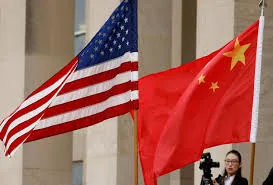
China has warned the United States that it will take necessary countermeasures following a federal decision to block Chinese telecommunications companies from accessing American phone numbers.
In an official statement released on Sunday, China’s Ministry of Commerce expressed firm opposition to the regulatory restrictions.
The ministry accused Washington of abusing regulatory power and unfairly suppressing foreign commercial enterprises under the guise of national security.
The dispute follows a vote by the US Federal Communications Commission (FCC) on Thursday to bar Chinese operators from directly obtaining American numbering resources.
FCC Targets Chinese Carriers On National Security Grounds
The new FCC rules prevent telecommunications providers on the agency's "Covered List" from directly accessing telephone number pools used for internet-based calling.
The restrictions directly impact major Chinese state-owned operators, including China Telecom, China Mobile, and China Unicom.
United States regulators defended the policy as a vital national security measure.
The FCC stated that tightening controls protects critical communication networks from foreign surveillance, malicious exploitation, and automated robocall schemes.
American authorities have systematically curtailed Chinese telecom operators over recent years, revoking their authority to provide domestic and international services within the United States.
Beijing Decries Regulatory Abuse And Decoupling
China’s Ministry of Commerce responded sharply to the vote, arguing that the US decision lacks factual backing.
A ministry spokesperson said the FCC had repeatedly generalized national security risks to disrupt lawful business operations.
“The agency has smeared Chinese telecom companies and maliciously suppressed their US operations without any factual basis,” the spokesperson said.
Beijing noted that the policy violates international principles of non-discrimination and fair market competition.
The ministry also accused the FCC of actively pushing for economic decoupling across the telecommunications, communications equipment, and certification sectors.
Chinese officials argued that such unilateral measures undermine the broad diplomatic consensus reached during recent high-level meetings between Chinese and American leaders.
Rising Tech Tensions And Retaliation Risks
The dispute adds fresh friction to already strained trade and technology relations between the world’s two largest economies.
While the Chinese Commerce Ministry did not specify what retaliatory steps it would take, potential countermeasures could include regulatory reviews of American technology firms operating in China or tighter market access rules.
Beijing urged Washington to retract the numbering ban immediately and return to bilateral consultations to resolve trade grievances.
Industry analysts warn that deepening regulatory divisions in global telecom standards will accelerate supply-chain fragmentation and increase operational costs for international enterprise networks.