
Carney Hails ‘Great Result’ as Alberta Rejects Separatism
Canadian Prime Minister Mark Carney has hailed Alberta’s decisive vote against pursuing separation from Canada as a “great result for Canada”, giving his national-unity campaign a boost while leaving unresolved the western province’s long-running grievances over federal policies.
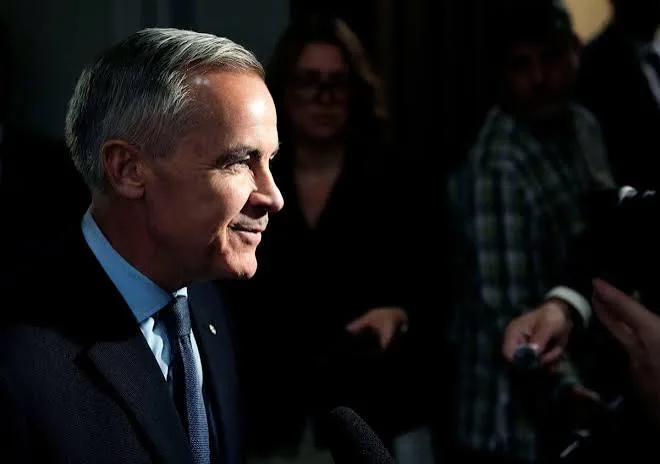
Canadian Prime Minister Mark Carney has welcomed Alberta voters’ overwhelming rejection of a move towards independence, describing the result as a “great result for Canada” after roughly three-quarters of voters backed remaining in the federation in a referendum held on October 19.
The vote dealt a significant setback to Alberta’s separatist movement and offered a political boost to Carney, who campaigned for national unity ahead of the referendum. Preliminary results reported by Elections Alberta showed approximately 75 per cent of voters favoured remaining in Canada, while about 25 per cent supported starting the legal process for a future binding referendum on separation. The result was still based on unofficial returns in reports published on October 20.
Speaking to reporters in Ottawa on Tuesday, Carney said Albertans had chosen to stay together and build a shared future. He said he had spoken with Alberta Premier Danielle Smith that morning and discussed working together in a spirit of co-operative federalism, including on immigration and other areas of shared responsibility.
The referendum did not ask Albertans to vote directly on independence. Instead, it asked whether the provincial government should begin the constitutional and legal process required to hold a later, binding vote on whether Alberta should leave Canada. A victory for the separatist option would therefore have opened the door to another referendum rather than immediately making the province independent.
Smith, who leads Alberta’s United Conservative Party and has opposed separation, welcomed the early result, saying voters had chosen a stronger Alberta within a united Canada. She called the referendum after separatist campaigners gained momentum and pressed for a public vote, amid growing frustration among some residents over federal energy, environmental and economic policies. Smith has argued for greater provincial autonomy while maintaining Alberta’s place in Canada.
Alberta’s independence movement has drawn support from residents who believe the province’s oil and gas industry is constrained by federal regulation and that the region’s economic contribution is not adequately reflected in national decision-making. Other supporters of the separation question have said they wanted to register dissatisfaction with Ottawa rather than necessarily leave Canada. Carney also cautioned against interpreting every vote for the separatist option as an endorsement of independence itself.
The referendum took place amid heightened tension between Canada and the United States over trade and US President Donald Trump’s repeated remarks about Canada becoming the 51st US state. Carney’s campaign for unity framed national cohesion as particularly important during a period of external economic and political pressure. Alberta is a major oil-producing province and a significant contributor to Canada’s energy exports, making its relationship with the federal government important to the country’s broader economic strategy.
Despite the scale of the defeat, separatist campaigners have indicated they intend to continue advocating for independence. The result, therefore, settles the immediate question of whether to initiate the process towards a binding separation referendum, but it does not erase the political discontent that helped bring the issue to a vote.
For Carney and Smith, the result creates an opportunity to shift the debate from separation towards the practical relationship between Ottawa and Alberta. Whether that translates into lasting improvement will depend on how both governments handle disputes over energy development, immigration, provincial authority and economic policy, the issues that have fuelled western alienation even as voters have rejected the prospect of breaking up Canada.
More on Global
Global
Four Canadian Soldiers Killed, Dozens Injured in Alberta Base Fire
18 Oct 2026

Global
Andy Burnham Accuses Russia of Meddling in Brexit Vote but Downing Street Defends Referendum Legitimacy
12 Oct 2026

Global
Trump Pauses New Russia Sanctions, Citing US National Interest
17 Oct 2026

Global
CNN Threatens Further Legal Action Over Repeated Air Force One Exclusions
21 Oct 2026

Global
Protester Punched at Trump Rally as President Mocks Her Appearance
14 Oct 2026
Partner with Follow Global Trends
Display banners, sponsored stories and founder spotlights.
You may also like

Global
China Asks Nigerian Media to Align Taiwan Coverage With One-China Position
10 Oct 2026
Global
Syria Weighs Military Support for Saudi Arabia as Houthis Escalate
8 Oct 2026

Global
Anne Carson Wins 2026 Nobel Prize in Literature for Genre-Bending Work
8 Oct 2026

Global
Russia Frees American Teacher Stephen Hubbard After Four Years in Prison
21 Oct 2026
Global
South Korea Withdraws Embassy Staff From Ukraine Over POW Row
20 Oct 2026
Global
CNN’s Christiane Amanpour Announces Departure in June 2027
19 Oct 2026