‘You’re Subsidizing the Elite’: Sowore Tears Into Tinubu’s Fuel Policy
Omoyele Sowore has attacked the Tinubu administration’s fuel subsidy policy, arguing that its benefits have flowed mainly to political elites rather than ordinary Nigerians.
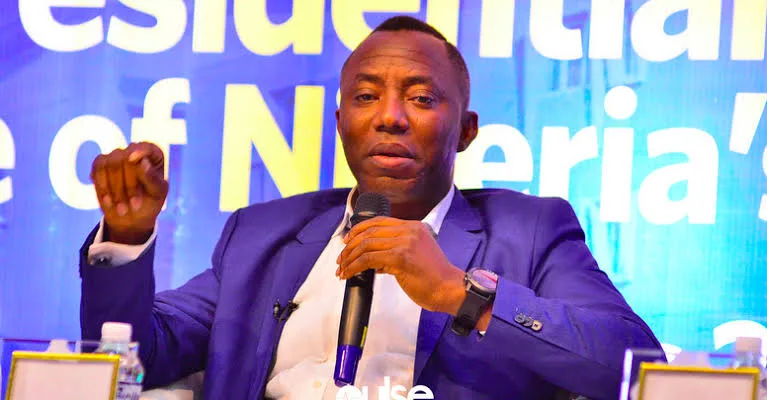
Presidential candidate of the African Action Congress, Omoyele Sowore, has reignited Nigeria’s bitter debate over petrol subsidy removal, accusing the government of shifting the burden of the policy onto ordinary citizens while states and political elites benefit from the resources freed up.
Speaking at the Nigerian Bar Association’s annual conference in Port Harcourt on Monday, Sowore said he had consistently questioned the way fuel subsidy had been administered in Nigeria. He argued that the central issue was not simply whether subsidy should exist, but who ultimately benefits from the system.
“Who are you subsidizing? You are subsidizing the elite. You are subsidizing the governors,” Sowore said, arguing that state governments had emerged among the principal beneficiaries since the policy was removed. He went on to describe the process as “robbing Peter Obi to pay Bola Tinubu.”
Sowore's remarks came as presidential contenders prepare for the 2027 election and as the subsidy question has once again moved to the centre of the political debate. Former Vice-President Atiku Abubakar has proposed restoring a targeted petrol subsidy if elected, while Peter Obi, another leading opposition candidate, has taken the opposite position, saying the subsidy should remain removed but that government has failed to properly use the resources generated by the reform.
Obi said at the same NBA conference that he still supports subsidy removal and that mismanagement of the resulting funds should not be used as an argument for reversing the policy. His position places him closer to the Tinubu administration on the question of removing the subsidy than to Atiku's proposal for a return to a targeted system.
The figures behind the argument are now central to the political fight. Finance Minister Taiwo Oyedele said last week that ending the petrol subsidy generated or mobilised ₦15.8 trillion in resources for the Federation between June 2023 and December 2025. According to the government, ₦5.4 trillion went to the Federal Government while ₦10.4 trillion was distributed among state and local governments through the Federation Account.
The government insists that those resources should not be viewed simply as money sitting in a separate “subsidy savings” account. Officials say the removal created fiscal space by ending a costly system that had placed considerable pressure on public finances. Information Minister Mohammed Idris said the reform allowed resources previously committed to subsidizing fuel consumption to be redirected towards infrastructure, security, human capital and social protection.
President Bola Tinubu has been equally firm in defending the decision. He has argued that the subsidy had become financially unsustainable and that reversing it would undermine the economic reforms his administration has pursued since taking office. In response to calls for its restoration, Tinubu recently described such a proposal as demonstrating “serious ignorance” of governance and economics.
The policy has nevertheless carried a heavy social cost. Petrol prices rose sharply after Tinubu announced the subsidy removal in May 2023, contributing to higher transportation, food and production costs. Nigeria's inflation rate subsequently climbed substantially, intensifying the cost-of-living crisis that has remained one of the defining political issues of the Tinubu presidency.
Sowore's criticism goes beyond the immediate price of petrol. He has previously argued that the government continues to provide forms of support that effectively amount to subsidies, while ordinary Nigerians bear the consequences of higher fuel and transportation costs. In an August television interview, he said he would restore petrol subsidy if elected, while arguing that the existing system had simply changed its name rather than disappearing entirely.
His latest intervention therefore presents a somewhat different argument from the one implied by a straightforward return to the old subsidy regime. Sowore says he has consistently opposed the way the policy was structured and has questioned whether the supposed savings have translated into meaningful relief for Nigerians. His criticism also comes as the government increasingly uses the ₦15.8 trillion figure to defend the economic case for the reform.
The disagreement is likely to intensify as the 2027 campaign gathers pace. For Tinubu, the subsidy removal remains a central pillar of his economic reform story; for opposition politicians, the question is whether the financial gains have been converted into better living conditions for citizens. That distinction could prove crucial at the ballot box.
The broader issue is no longer simply whether Nigeria can afford to subsidize petrol. It is whether Nigerians can see a convincing return from the painful decision to stop doing so. Until citizens can clearly connect the billions of naira released by the reform to cheaper transportation, better public services, stronger infrastructure and improved household incomes, the subsidy debate will remain politically potent, and Sowore's charge that ordinary Nigerians are paying while elites benefit will continue to find an audience.