
Xavi Ends 48-Year Netherlands Tradition as Oranje Turn to Spanish Tactician
The Netherlands have broken with a 48-year tradition by appointing Xavi as head coach, ushering in a new era for the national team.
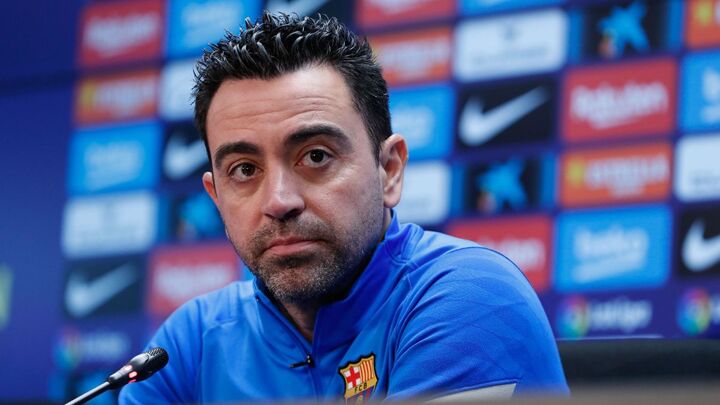
The Netherlands have made a striking break with tradition by appointing Xavi Hernández as their new head coach, making the former Barcelona midfielder the first foreigner to take charge of the Dutch men's national team since Austria's Ernst Happel in 1978.
Xavi, 46, has signed a contract running through the 2030 World Cup, returning to management after leaving Barcelona in 2024. The appointment represents a major change of direction for a football nation that has long relied on Dutch coaches to protect and develop its distinctive playing philosophy.
The choice is particularly intriguing because Xavi's football education is deeply connected to the Netherlands—even though he is Spanish.
At Barcelona's famed La Masia academy, Xavi developed within a football culture heavily influenced by Dutch legend Johan Cruyff, whose ideas about possession, movement, positional play and attacking football became central to Barcelona's identity. Xavi later became one of the finest practitioners of that philosophy as a player and subsequently attempted to carry it into management.
That connection may help explain why the Dutch federation has taken such an unconventional step.
For decades, the Oranje have largely trusted their own coaching tradition. Names such as Rinus Michels, Louis van Gaal, Guus Hiddink, Dick Advocaat, Frank de Boer and Ronald Koeman have shaped the national team's modern identity, with the KNVB repeatedly turning to coaches steeped in Dutch football.
Xavi now becomes the exception.
The last foreign coach was Ernst Happel, an Austrian who guided the Netherlands to the 1978 World Cup final. Happel's team lost 3-1 to Argentina after extra time, meaning the historical comparison surrounding Xavi is not insignificant: the previous foreign coach to lead the Netherlands took the team all the way to a World Cup final.
Xavi inherits a team with substantial expectations.
The Netherlands qualified for the 2026 World Cup unbeaten, winning their qualifying group with six victories and two draws. The Oranje entered the tournament with a talented squad containing established stars such as Frenkie de Jong, Virgil van Dijk and Cody Gakpo.
But their World Cup campaign ended earlier than many expected, with the Netherlands eliminated by Morocco on penalties in the round of 32. That result contributed to Ronald Koeman's departure and opened the door for the KNVB to consider a different approach.
Xavi's challenge will therefore be twofold.
He must deliver results while also convincing a football culture famous for its tactical identity that a Spaniard can carry the Oranje philosophy forward without diluting it.
The irony is that Xavi's own football background makes him unusually well suited to that task. As a Barcelona player, he was at the heart of a team that transformed possession into an art form. He played under coaches including Louis van Gaal, Frank Rijkaard and Pep Guardiola, while Guardiola's Barcelona side became one of the most influential teams in modern football.
As a coach, however, Xavi's record has been more complicated. He began his managerial career at Al-Sadd in Qatar, where he won multiple trophies before taking over Barcelona in 2021. At Camp Nou, he guided the club to the La Liga title and Spanish Super Cup in 2023, but his tenure ended in 2024 after three seasons.
The Netherlands job gives him something he did not have at Barcelona: time to build around a national pool of players rather than recruit a club squad every transfer window.
It also presents a fascinating tactical possibility.
Xavi could potentially combine the possession-heavy principles associated with his Barcelona education with the Dutch tradition of positional intelligence and attacking flexibility. The two football cultures have influenced each other for decades, particularly through Cruyff's enormous impact on Barcelona.
The KNVB itself is entering the new era with ambitious goals. Its 2026-2030 strategy calls for the Netherlands to remain a leading talent-development nation and aims to strengthen the quality and international competitiveness of Dutch football.
Xavi's appointment therefore fits into a broader question facing Dutch football: how does a country with one of the world's most admired football philosophies remain competitive in an era when tactical ideas have become increasingly global? Hiring a foreign coach may be the KNVB's answer.
But there is little room for nostalgia once Xavi takes charge. His first major test will come quickly. His debut is scheduled against Germany in the Nations League on September 24, giving him a high-profile introduction to the demands of international management.
For FollowGlobalTrends, the appointment is fascinating because Xavi is not simply another foreign coach taking an international job. He is an outsider whose football education was profoundly shaped by the very country whose national team he has now been asked to lead. The Netherlands have effectively gone abroad to find a coach who understands one of their most famous football exports.
After 48 years of Dutch managers, the Oranje have opened the door to Spain. Now Xavi has to prove that Dutch football can sound different without losing its identity.