US, Nigeria Step Up Security Cooperation as Top Officials Meet in Washington
The US and Nigeria are deepening security cooperation as senior officials meet in Washington to strengthen efforts against shared security threats.
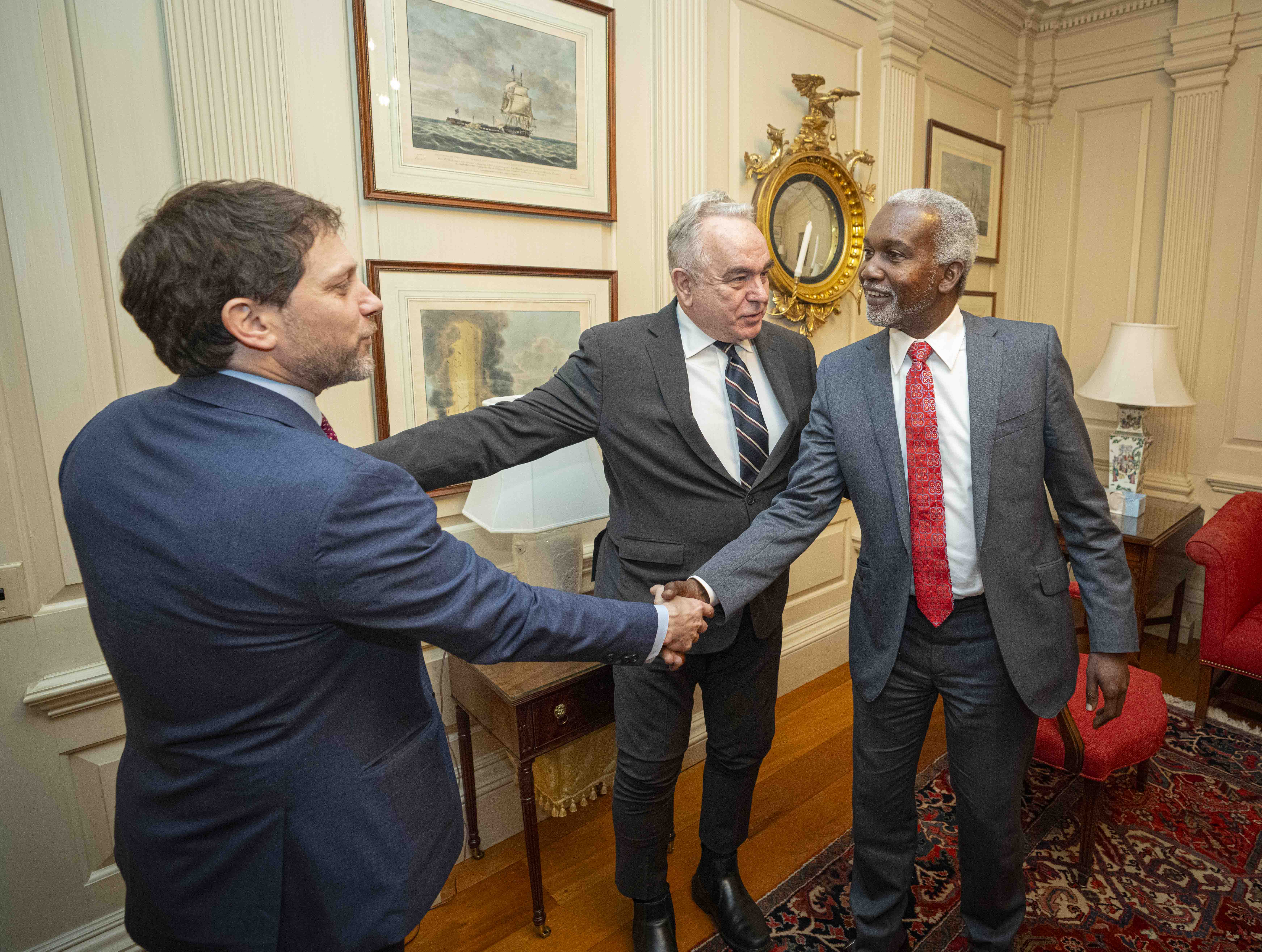
Nigeria and the United States have opened a fresh round of high-level security discussions in Washington, with both countries seeking to deepen cooperation against terrorism and other threats at a time when Nigeria's security challenges remain a major concern for the region.
National Security Adviser Nuhu Ribadu is leading the Nigerian delegation to the latest meeting of the Nigeria–US Joint Working Group, while US Under Secretary of State for Political Affairs Allison Hooker is leading the American side. The meeting is taking place in Washington, DC, on Wednesday.
The discussions are focused on counterterrorism, progress made under the bilateral security framework and the next steps for strengthening cooperation between Abuja and Washington. A separate bilateral defence meeting is also scheduled for Thursday, suggesting that the engagement extends beyond diplomatic discussions into practical military cooperation.
The talks are the latest stage in a security relationship that has expanded considerably over the past year.
The Joint Working Group was created after a series of high-level engagements between the two governments, including an earlier meeting in Washington and the group's inaugural session in Abuja in January 2026. The framework was designed to give Nigeria and the US a formal channel for coordinating their response to terrorism and related security threats.
For Nigeria, the importance of the partnership is straightforward.
The country continues to confront a complicated security landscape involving jihadist insurgencies in the north-east, banditry and kidnapping in other parts of the country, as well as wider transnational threats across the Sahel. The challenge is no longer simply about military firepower; intelligence, surveillance, border security and the ability to track increasingly mobile armed groups have become equally important.
That is where Washington's capabilities can make a difference.
The United States has expanded intelligence and technical cooperation with Nigeria, while American military personnel have also been deployed to Nigeria to provide training, intelligence and technical support rather than take part in combat operations.
The relationship has already produced tangible operational cooperation.
In June, US officials said a coordinated counterterrorism operation in Nigeria had killed 199 suspected terrorists and resulted in what the US described as its largest seizure of terrorist electronic material since the September 11 attacks. The operation was presented as evidence of the growing intelligence relationship between Washington and Abuja.
That cooperation has also carried a sensitive political dimension.
The Trump administration previously redesignated Nigeria as a Country of Particular Concern, citing concerns over religious freedom and the protection of Christians. Nigerian authorities have pushed back against the framing of the country's insecurity as a religious conflict, stressing that violence affects communities across religious and ethnic lines.
The Joint Working Group has provided a mechanism for both governments to navigate that disagreement while maintaining their broader security relationship.
For Abuja, the diplomatic challenge is to secure greater American support without appearing to surrender control over Nigeria's security policy. For Washington, the objective is to strengthen a key regional partner while pushing Nigeria to deliver more effectively against armed groups and protect vulnerable communities.
That balance will remain important as the partnership develops.
Nigeria is not the only country dealing with the expanding security crisis across the Sahel, but its size, military capacity and strategic position make it one of the most important states in West Africa's security architecture.
A more capable Nigerian security response could therefore have consequences well beyond the country's borders.
It could also help Washington maintain a stronger counterterrorism presence in a region where instability has spread across national boundaries and where the withdrawal or reduction of Western military footprints in parts of the Sahel has complicated intelligence gathering and operations.
The latest Washington meeting is therefore about more than another diplomatic photograph.
It is an opportunity for both governments to assess whether the commitments made over the past year are producing measurable results, and what needs to change next.
The presence of senior Nigerian officials, including Defence Minister Christopher Musa, Foreign Affairs Minister Bianca Odumegwu-Ojukwu and Interior Minister Olubunmi Tunji-Ojo, underlines the breadth of the discussions.
For FollowGlobalTrends, the significance of the renewed talks lies in the evolution of the Nigeria-US relationship from occasional security assistance into a more structured partnership.
Washington has intelligence, technology and military capabilities that Nigeria needs. Abuja, meanwhile, provides the local knowledge, operational access and regional influence that make any American counterterrorism strategy in West Africa more effective.
The partnership is therefore becoming increasingly difficult for either side to ignore.
The real test, however, will not be the communiqués issued after the meetings.
It will be whether the intelligence shared, equipment provided and strategies agreed in Washington can translate into safer communities and a measurable reduction in Nigeria's insecurity.
That is the outcome Nigerians will ultimately be watching.