
Up to 1,200 US Deportees Headed for Liberia Under New Migration Deal
Liberia has agreed to accept up to 1,200 people deported from the United States, as Washington expands efforts to secure third-country arrangements for deportees.
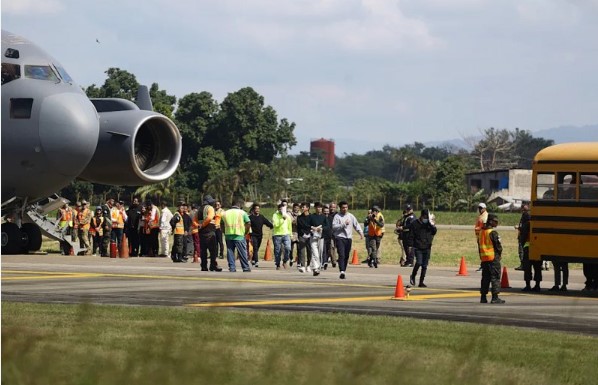
Liberia has agreed to receive as many as 1,200 people deported from the United States over the next year, in a significant expansion of Washington’s growing effort to relocate migrants to countries other than their own.
The arrangement, announced by Liberian authorities on Tuesday, August 18, will initially involve 20 deportees expected to arrive in Liberia on Thursday. The group will include nationals from Africa, North and South America and the Caribbean, meaning those being transferred are not necessarily Liberian citizens or people with previous ties to the country.
Liberia’s Information Minister Jerolinmek Piah said the government had agreed to receive the migrants for up to a year and described the decision as humanitarian. He said those arriving would have the option of seeking asylum in Liberia or leaving the country if they wished. Justice Minister Natu Oswald Tweh said Liberian authorities had screened the names provided ahead of the transfers and that most of the people involved had immigration violations or related offences.
The agreement is part of a broader policy under US President Donald Trump in which Washington has sought third countries willing to accept migrants whom the United States cannot, or does not immediately, return to their countries of origin. Similar arrangements have been reported with several African countries, including the Democratic Republic of Congo, the Central African Republic, Equatorial Guinea, Cameroon, Ghana and Sierra Leone.
One of the most sensitive aspects of the policy is that some migrants facing transfer to third countries have previously received protection from US immigration judges against being sent back to their home countries because of concerns about torture or other serious harm. Liberian officials have not said whether any of the people covered by this particular arrangement have such protection orders.
The US government has defended third-country deportations as lawful, while immigration lawyers and rights advocates have questioned the practice. Critics argue that sending migrants to countries where they have no previous connection can create another route toward eventual removal to the countries they originally fled, potentially undermining protections granted by US courts. The details of many of these agreements have also attracted scrutiny because of limited public information about the conditions under which deportees are received and what happens to them afterwards.
For Monrovia, the government says the decision is consistent with Liberia’s history of providing refuge and comes with US support to help manage the programme and strengthen the country's migration system. Liberian authorities have also stressed that the arrangement is humanitarian rather than a direct exchange for a disclosed political or financial concession. The exact nature and value of the US support have not been publicly detailed.
The first 20 arrivals will therefore be an important test of how the agreement works in practice. Questions around accommodation, legal status, access to asylum procedures, freedom of movement and the possibility of onward removal are likely to receive close attention as Liberia begins implementing a policy that could eventually bring more than a thousand foreign nationals into the country.
Beyond the numbers, Liberia’s decision places the country at the centre of a growing international debate over where responsibility for deported migrants should lie. For Washington, the arrangement expands the reach of its immigration enforcement strategy; for Liberia, it offers an opportunity to demonstrate its humanitarian credentials while taking on a politically and legally sensitive responsibility. How the country protects the rights of those transferred could ultimately matter as much as the agreement itself.