Trump Signs Order to Rename Lake Ontario ‘Lake America’ as Canada Pushes Back
Donald Trump has ordered Lake Ontario to be called “Lake America” in U.S. federal records, triggering an immediate rejection from Canada and adding a new symbolic dispute to the countries’ worsening trade tensions.
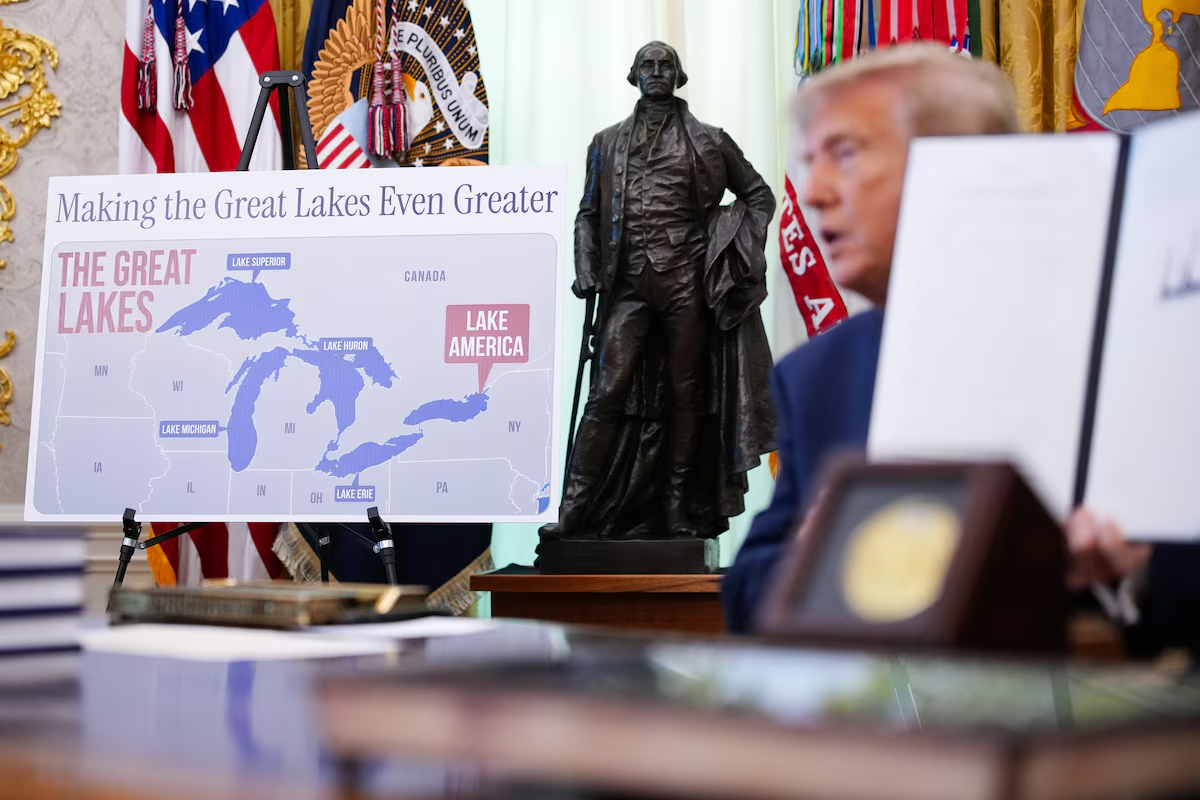
US President Donald Trump has signed an executive order directing the renaming of Lake Ontario as “Lake America” for official US federal purposes, turning a previously floated idea into another point of friction between Washington and Ottawa.
Trump signed the order on Thursday, August 27, in the Oval Office, instructing Interior Secretary Doug Burgum to oversee the change and update the US Geographic Names Information System. The White House said the move was intended to recognise what it describes as the lake’s importance to American history, commerce and national development.
The decision does not, however, give the US president the ability to dictate what Canada calls the lake. Lake Ontario sits across the international boundary between New York and the Canadian province of Ontario, meaning the new designation applies to US federal usage rather than automatically changing the name in Canada or internationally. Reuters reported that the order does not compel Canadian authorities or international bodies to adopt “Lake America”.
Canadian Prime Minister Mark Carney moved quickly to reject the change. He said Canadians would continue to use the name Lake Ontario, pointing to its long history and Indigenous origins. The name “Ontario” is derived from a Wendat term and has been used for the lake for more than four centuries, predating both modern Canada and the United States.
New York Governor Kathy Hochul has also rejected the renaming, underscoring the awkward reality created by the order: even within the United States, acceptance of the new designation is not guaranteed. The lake's established name is embedded in maps, scientific records, commercial activity and cross-border institutions, making a federal terminology change far easier to announce than to impose universally.
Trump's decision comes at a particularly tense moment in US-Canada relations. Washington and Ottawa have been locked in a damaging trade dispute, with negotiations recently breaking down and the United States imposing 50% tariffs on about $20 billion of Canadian imports. Canada has announced retaliatory measures, adding further pressure to an already strained relationship.
Trump had first suggested changing the lake's name earlier this week, presenting the idea in the context of his confrontation with Canada. By Thursday, the proposal had become official US policy. The president has also previously pursued geographic renaming, most notably changing the US federal designation of the Gulf of Mexico to the “Gulf of America” in 2025.
The White House portrays the latest move as part of a broader effort to emphasise American history and influence over the Great Lakes. But outside the administration, the decision has been widely interpreted as a political gesture aimed at Canada during the trade confrontation. Critics have argued that changing the name of a shared body of water does little to address the economic disagreements that brought the two countries back into a tariff dispute.
There is also a deeper historical dimension. Lake Ontario's name is not simply a modern label attached to a geographical feature. Its roots extend into Indigenous history long before either Canada or the United States existed as modern states. That has made the renaming especially sensitive for Canadian officials and Indigenous leaders who see the original name as part of the region's historical record.
For now, two names are likely to coexist depending on where the reference is being made: “Lake America” in US federal terminology and “Lake Ontario” in Canada. That split is not unprecedented in international geography, but it is particularly striking because the dispute involves two close neighbours whose economies, communities and natural resources are deeply intertwined.
The lake itself, of course, has not changed. What has changed is the political meaning attached to its name. Trump's order turns a shared geographical landmark into another symbol of the growing distance between Washington and Ottawa, showing how the current dispute has moved beyond tariffs and trade into questions of identity, history and national sovereignty. Whether the name survives beyond US government documents remains uncertain, but the episode has already demonstrated just how far the US-Canada relationship has deteriorated.