
Tinubu’s 2027 Allies Seek Ohanaeze, Anyaoku’s Help to Persuade Obi to Quit Race
A Tinubu support group in the South-East says it will seek the intervention of prominent Igbo leaders to persuade Peter Obi to abandon his 2027 presidential bid and back the president.
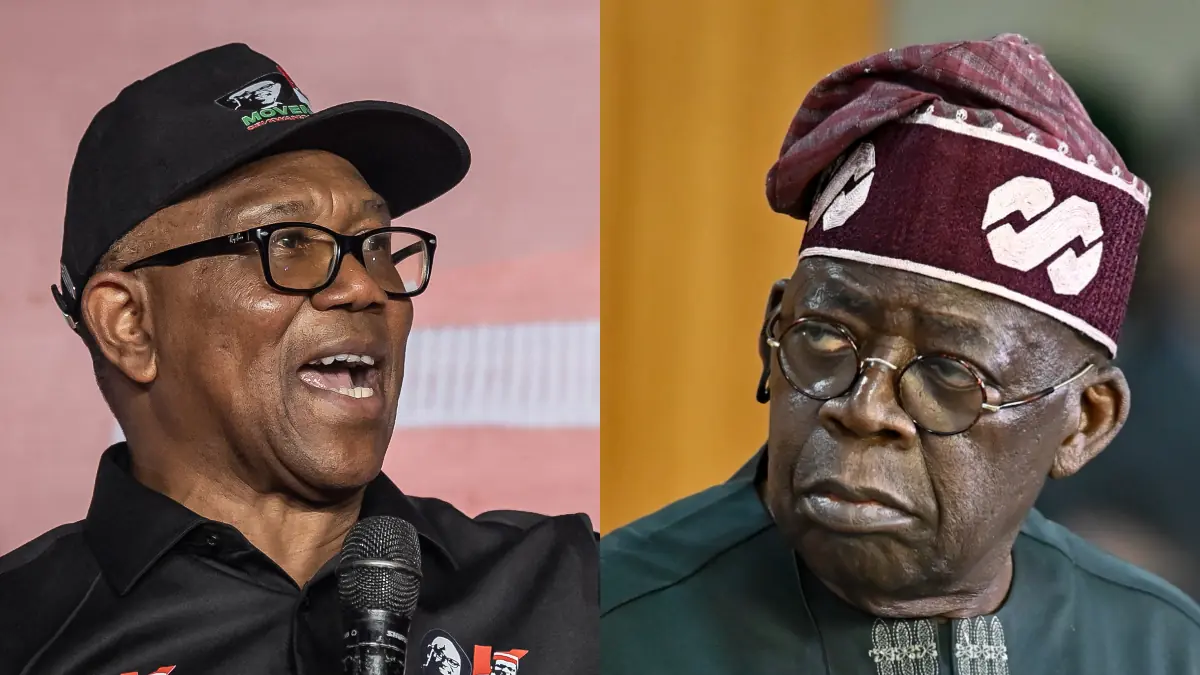
A support group working for President Bola Ahmed Tinubu’s re-election has opened a fresh political front in the South-East, saying it plans to approach leading Igbo figures in an effort to persuade former Anambra State governor Peter Obi to withdraw from the 2027 presidential contest and support the incumbent.
The South-East chapter of the Renewed Hope for Greater Nigeria (RHGN) said it would seek the involvement of Ohanaeze Ndigbo President-General Senator John Azuta Mbata, former Commonwealth Secretary-General Chief Emeka Anyaoku and former Chief of Naval Staff Commodore Ebitu Ukiwe. The proposal was disclosed by RHGN’s South-East leader, Mazi Franklin Ngoforo, after a meeting in Owerri focused on strengthening Tinubu’s support across the region.
Ngoforo’s argument is less about asking Obi to abandon politics altogether and more about postponing his presidential ambition. He said the group believes the South-East could gain more strategically by building an understanding with the South-West and supporting Tinubu now, particularly because a second term would constitutionally be the president’s final term.
In that calculation, the group wants Igbo political interests to be considered over a longer horizon. Ngoforo argued that backing Tinubu in 2027 could create what he described as a political compact that would strengthen the South-East’s prospects when presidential power next becomes available to another southern region. He maintained that stepping aside in 2027 would therefore amount to deferring Obi’s ambition rather than ending it.
The proposed intervention comes as Obi remains one of Tinubu’s most significant potential challengers. Obi, who finished third in the 2023 presidential election after running on the Labour Party platform, has since moved into the opposition camp and was unveiled in May as the presidential candidate of the Nigeria Democratic Congress (NDC) for the 2027 election. He subsequently presented the contest as a choice between Nigerians and what he described as bad leadership.
That makes the RHGN proposal politically significant. Obi has continued to command considerable attention in the South-East, where his 2023 campaign generated particularly strong support, while Tinubu’s allies have spent months trying to build a stronger political foothold in the region.
RHGN has already been active on that front. In July, the organisation said it was building a grassroots structure across the five South-East states and announced plans for a 50-person mobilisation team at polling booths throughout the region. It has also held engagements with Pentecostal leaders and other community stakeholders as part of its campaign for Tinubu.
The group’s campaign reflects a broader push by Tinubu’s allies to make political gains in a region where the president faces a formidable local rival. Works Minister David Umahi, for instance, has publicly urged South-East voters to choose Tinubu over Obi, arguing that federal infrastructure projects and other initiatives demonstrate the administration’s commitment to the region.
There is, however, no indication that Obi has agreed to the proposed appeal, nor has there been a public commitment from Anyaoku, Ukiwe or the leadership of Ohanaeze Ndigbo to lead such a delegation. The proposal at this stage remains an initiative of RHGN, rather than an established agreement involving the named Igbo leaders.
The political calculation is also not straightforward. While some South-East political figures and governors have moved closer to Tinubu, Obi remains a prominent political figure in the region, and the question of whether voters will follow elite alliances or maintain their own preferences is likely to remain central to the 2027 contest. Reports in recent months have pointed to growing efforts by Tinubu’s camp to challenge Obi’s influence in the zone, even as the former governor continues to position himself as a national opposition candidate rather than simply a regional one.
For Tinubu’s supporters, persuading Obi to step aside would remove one of the most recognizable opposition figures from the presidential race and potentially reshape the electoral arithmetic in the South-East. For Obi, however, accepting such an arrangement would mean giving up the opportunity to contest an election in which he has already secured a presidential ticket.
The proposed meeting therefore goes beyond a request for one politician to withdraw. It highlights the increasingly transactional nature of the alliances taking shape ahead of 2027, with competing camps seeking to turn regional influence, political goodwill and long-term promises into electoral advantage. Whether Igbo leaders embrace the proposal—and whether Obi himself is willing to listen—could offer an early indication of how far Tinubu’s South-East strategy can go before the campaigns fully gather momentum.