Tinubu, Atiku, Obi: Three Campaigns, Three Strategies as 2027 Race Opens.
President Bola Tinubu, former Vice President Atiku Abubakar and former Governor Peter Obi are adopting different strategies as the race gathers momentum.
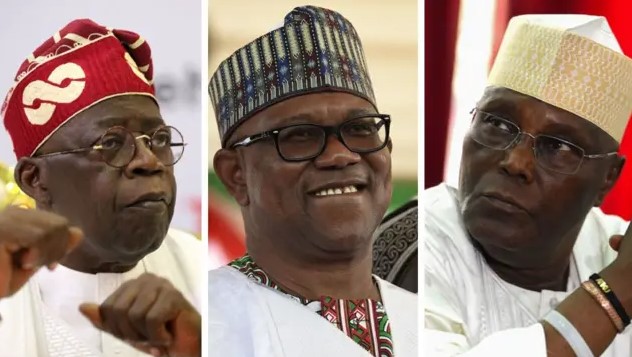
Nigeria’s 2027 presidential race formally moved from months of political maneuvering into open campaigning on Wednesday, August 19, with President Bola Ahmed Tinubu, former Vice President Atiku Abubakar and Peter Obi taking noticeably different approaches to the first day of the contest.
The Independent National Electoral Commission’s timetable opened the campaign window for the presidential and National Assembly elections on August 19, with the presidential vote scheduled for January 16, 2027. Rather than producing three simultaneous mega-rallies, however, the first day offered an early glimpse of the contrasting strategies the major contenders are likely to pursue over the next five months.
For Tinubu, the opening day carried the unusual dual responsibility of being both a campaign launch and another day in office. His political machinery moved ahead with a formal re-election push in Bayelsa State, where Governor Douye Diri flagged off the President’s campaign in Yenagoa. The choice of Bayelsa was politically significant: it gave the ruling All Progressives Congress an opportunity to showcase its growing reach in a state long associated with the opposition Peoples Democratic Party.
Tinubu himself was not required to turn the opening day into a conventional presidential rally. The President had been represented at the National Peace Accord ceremony in Abuja the previous day by Secretary to the Government of the Federation George Akume, while APC structures and allies continued the mobilization around his re-election. The ruling party enters the campaign with considerable organizational advantages, including the movement of a large number of governors and political figures into its camp. The Associated Press reports that 31 of Nigeria’s 36 governors are now members of the APC.
The larger argument for Tinubu will now be whether his administration’s economic reforms can be translated into a persuasive electoral story. His government says the removal of the petrol subsidy, changes to the foreign-exchange regime and other reforms have restored economic stability, improved government revenues and attracted investors. Critics, however, point to the pressure on household incomes, inflation, unemployment and insecurity. Reuters reported that the coming election is likely to test whether Nigerians believe the hardship associated with the reforms is a temporary price worth paying for promised longer-term gains.
Atiku Abubakar entered the campaign period from a very different position. The African Democratic Congress candidate is attempting to build a national opposition machine around a coalition that has already undergone significant political strain. His first-day story was therefore less about a giant public launch and more about the task of consolidating the political structure that will carry his challenge to Tinubu across the country.
That challenge is complicated by unresolved questions around the ADC campaign organisation. Before the campaign window opened, party sources had been divided over whether former Sokoto State Governor Aminu Tambuwal or former Cross River State Governor Liyel Imoke should take the leading role in Atiku’s campaign structure. Reports had indicated that Atiku and sections of the party favoured Tambuwal, but consultations were still continuing.
Atiku’s broader campaign message is expected to centre heavily on the economy, security and the argument that Nigerians need an alternative to the APC. His camp has repeatedly highlighted unemployment, declining purchasing power, insecurity and the need for stronger private-sector-led growth. But the former vice president also faces the strategic problem that has shadowed the opposition since the 2023 election: how to turn dissatisfaction with the incumbent into one sufficiently broad electoral coalition.
Peter Obi, meanwhile, used the opening day to define the philosophy behind his campaign rather than simply launch another political rally. His media office presented him as the “Candidate of Conscience” and urged Nigerians to use the 150-day campaign period to scrutinise the records, ideas and character of all the presidential candidates. The NDC candidate's message was built around competence, accountability, fiscal discipline and a shift from what he describes as a consumption-driven economy towards production.
Obi’s opening pitch also placed particular emphasis on reducing the cost of governance, improving education and healthcare, strengthening national security and creating opportunities for young Nigerians. It was a deliberate attempt to move the campaign away from the traditional emphasis on rallies and political slogans and towards measurable questions about how government should spend public money and deliver services. Whether that message can be converted into a sufficiently broad national political organisation will be one of the central tests of his campaign.
The three camps were also entering the formal campaign period under the shadow of the National Peace Accord signed in Abuja on Tuesday. Obi attended and signed the agreement, while Tinubu and Atiku were absent in person; Tinubu was represented by Akume. The accord calls on candidates and parties to reject violence, hate speech, personal attacks, misinformation and ethnic or religious incitement. Obi told reporters that voters should punish politicians who breach those commitments by rejecting them at the polls.
That emphasis on conduct is particularly important because the 2027 contest is already shaping up as a high-stakes three-way battle, even though 19 presidential candidates are on the ballot. Tinubu has the advantages of incumbency, party machinery and a divided opposition. Atiku brings long experience, a substantial political network and the ADC coalition. Obi retains the youth-driven national appeal that transformed the 2023 election, but must now demonstrate that his support can be converted into the broader geographical and organisational reach required to win a presidential election.
The first day, then, was less about who produced the biggest crowd and more about the political narratives each contender intends to sell. Tinubu is asking voters to judge the direction of his administration and its reforms; Atiku is presenting himself as the experienced alternative capable of rebuilding the opposition challenge; and Obi is asking voters to make the election a referendum on competence, accountability and the quality of governance.
With January 16 now less than five months away, those messages will be tested against the realities Nigerians experience every day. The real campaign has begun, but the decisive contest will be whether each candidate can turn promises into trust, political structures into votes, and public dissatisfaction into a clear mandate. In a country where the 2023 election was won without a majority of the total votes cast by the leading contenders, the ability to build a genuinely national coalition may prove just as important as the strength of any individual campaign message.