
Sylva Dumps APC, Accuses EFCC of Partisanship Ahead of 2027
Former Bayelsa governor Timipre Sylva has resigned from the APC, accusing the ruling party of abandoning its founding principles and alleging that the EFCC has become politically partisan.
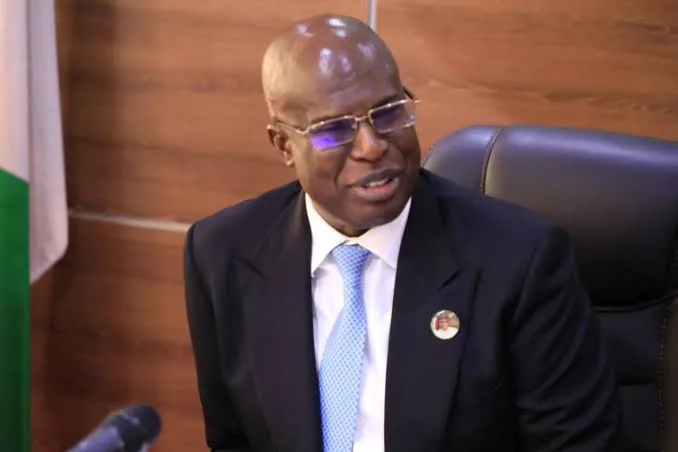
Former Bayelsa State governor and ex-Minister of State for Petroleum Resources Timipre Sylva has resigned from the All Progressives Congress, delivering a sharp rebuke of the ruling party and accusing the Economic and Financial Crimes Commission of increasingly acting like a political arm of the APC.
Sylva announced his resignation in a letter dated August 31, 2026, addressed to the APC chairman of Ward 4 in Brass Local Government Area of Bayelsa State. He said the decision followed consultations with his family, associates, colleagues and supporters, and took immediate effect. Copies were also sent to the APC national chairman, the Bayelsa State APC chairman and the EFCC chairman.
The former governor, who described himself as a founding member of the APC, said his departure was driven by what he considers a fundamental shift in the party's political character. He argued that the ideals that brought the party together had been seriously eroded and that he could no longer remain in an organisation whose leaders, in his view, treat political expediency as justification for virtually anything.
Sylva was particularly critical of what he described as the belief that “all is fair in politics”, arguing that political competition should still be constrained by standards of decency and morality. He also said the APC-led Federal Government had disappointed a large section of Nigerians and that he could see neither a credible attempt nor a realistic prospect of correcting its course.
His resignation letter went beyond the APC itself. Sylva deliberately copied the EFCC chairman and accused the anti-graft agency of becoming increasingly partisan.
He alleged that the commission had recently conducted itself more like an institution aligned with the ruling party than an independent agency of the Nigerian state. Sylva also said he understood that his decision to leave the APC could expose him and his associates to intensified scrutiny, but added that he was prepared to accept that risk.
The allegation comes against the backdrop of an existing legal and political dispute between Sylva and the EFCC. In November 2025, the commission declared him wanted over an alleged case involving conspiracy and the dishonest conversion of $14.86 million linked to funds provided by the Nigerian Content Development and Monitoring Board for the development of Atlantic International Refinery and Petrochemical Limited. Sylva's media aide rejected the allegations at the time, describing the EFCC action as a politically motivated campaign and insisting that the former minister had not diverted public funds.
The legal pressure has continued. In May 2026, the Federal High Court in Abuja ordered the interim forfeiture of nine properties allegedly linked to Sylva following an application by the EFCC. The order was provisional, meaning it did not amount to a final determination that the properties were proceeds of crime; interested parties were given an opportunity to challenge the forfeiture.
Sylva's political camp has consistently disputed the allegations against him. His media aide, Julius Bokoru, previously said Sylva would honour the EFCC's invitation after completing a medical check-up in the United Kingdom and rejected the commission's allegations, describing the refinery project at the centre of the investigation as legitimate and documented.
There has also been a separate political controversy around Sylva in recent weeks. His aide has challenged reports linking the former governor to an alleged plot against President Bola Tinubu, arguing that media coverage had moved beyond reporting allegations and was helping to create a predetermined public narrative. Those claims remain allegations, and Sylva's aide has urged journalists to distinguish accusations from facts established through legal proceedings.
Sylva's departure comes as Nigeria's political parties increasingly turn their attention towards the 2027 general elections. In his resignation letter, he called on Nigerians to vote for what he described as the country's interests rather than remain under the APC's control. His decision therefore carries significance beyond his personal break with the ruling party, particularly in Bayelsa, where he remains a prominent political figure and has previously contested for the governorship under the APC.
The APC has yet to publicly respond to Sylva's resignation or his accusation that the party has abandoned its founding ideals. Likewise, the EFCC has not, in the sources reviewed, issued a response specifically addressing his latest allegation of partisanship. The commission's stated mandate is to investigate and prosecute economic and financial crimes, while Sylva's claims about its political conduct remain allegations rather than established findings.
Sylva's exit is consequently more than another defection story in Nigeria's increasingly fluid political landscape. It brings together three issues likely to shape the 2027 contest: fractures within the ruling coalition, growing battles over the independence of state institutions, and the use of anti-corruption investigations in an increasingly charged political environment. Whether Sylva can translate his break with the APC into a meaningful political realignment remains to be seen, but his decision adds another prominent voice to the growing contest over who controls Nigeria's political direction heading into 2027.