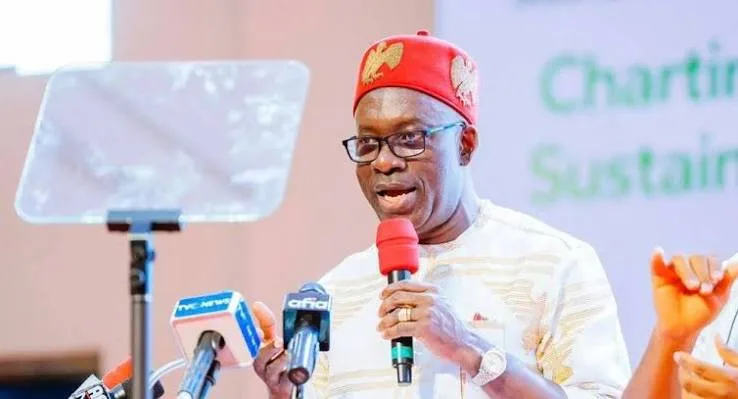
Governor Chukwuma Soludo says Igbo must choose reason over raw sentiment if the South-East is ever to attain national political leadership. He delivered the warning during an expansive cross-party stakeholders meeting in Awka, which brought together thousands of political leaders and community organizers from across Anambra State.
The governor stated that the region has spent decades locked in a struggle between emotional reactions and practical political calculation. While emotions often dominate public debate during election cycles, he argued that only structured alliances can produce lasting electoral success.
Addressing delegates from multiple parties who assembled to form a unified campaign structure, the governor stressed that Soludo says Igbo must choose reason because playing the role of a lone ranger has brought no tangible benefit to the region.
The Limits of Protest Politics
The former central bank governor explained that eastern leaders have pursued the nation's highest office since the late 1970s without breaking through. While the region has occupied numerous prominent positions across public administration, the presidency has remained out of reach due to narrow voting patterns.
He argued that continuing the politics of protest only deepens regional marginalisation. Federal allocations and national budget decisions determine large-scale infrastructure investments, including regional highways and energy networks, rather than individual state budgets alone.
Reaffirming that Soludo says Igbo must choose reason when evaluating national power dynamics, he insisted that working with the incumbent central administration is a matter of self-interest rather than a political favour to others.
Incumbency and Historical Alliances
The state executive addressed the political strength of the presidency, reminding delegates that defeating an incumbent head of state is historically difficult in modern democracies. He pointed out that if opposing coalitions could not stop the current leadership before it took office, overcoming it from within government would prove far more difficult.
He also touched on his relationship with prominent eastern figures seeking the presidency, describing them as close personal associates and brothers with whom he shares mutual respect. However, he maintained that personal affection must not cloud realistic political assessments.
Recalling the political bridge-building of early republican leaders who forged national coalitions, he argued that the South-East must revive broad partnerships with northern and western voting blocs to build a realistic path to the presidency in the future.
Multi-Party Coalition Unveiled in Awka
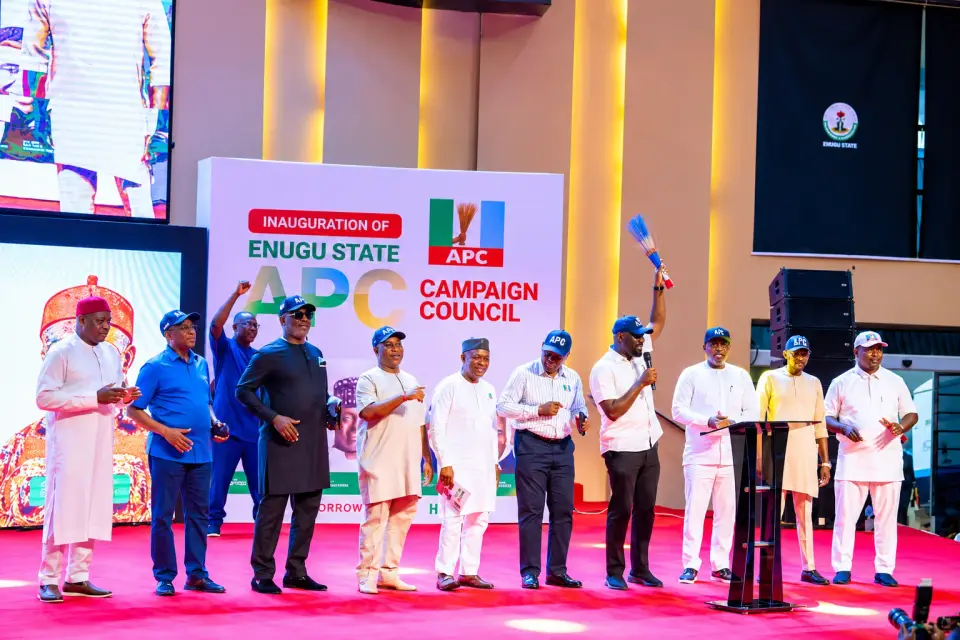
The gathering in Awka marked the formal unification of party executives and grassroots organizers from four different political organisations behind a single presidential campaign committee. Over 4,600 council members were inaugurated to coordinate civic engagement and voter mobilisation across the state’s twenty-one local government areas.
Local coordinators were directed to engage communities directly and focus voter education on economic development and security gains. Leaders at the assembly affirmed that aligning state priorities with federal planning offers the clearest route to regional prosperity.
The coalition concluded the session by scheduling grassroots sensitisation tours across local wards in preparation for upcoming electoral timetables.