
Ratko Mladić, Convicted Over Srebrenica Genocide, Dies at 84
Former Bosnian Serb commander Ratko Mladić has died at 84 in UN custody, nearly three decades after the Srebrenica massacre that made him one of Europe’s most notorious war criminals.
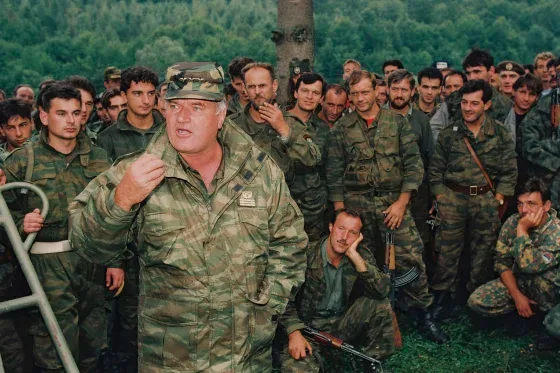
Ratko Mladić, the former Bosnian Serb military commander convicted of genocide, war crimes and crimes against humanity for his role in the 1992–95 Bosnian war, has died at the age of 84 while serving a life sentence in a United Nations detention facility in The Hague.
His death on Thursday was confirmed by a UN official and his lawyer after Serbian state media first reported that the former general had died in a prison hospital. Mladić had been in poor health for years and was repeatedly hospitalised before his death.
For survivors of Bosnia's war, however, Mladić's death is inseparable from the events that made his name synonymous with some of Europe's worst atrocities since the Second World War. As commander of the Bosnian Serb Army, he was a central figure in the campaign against Bosnia's Muslim and Croat populations and in the siege of Sarajevo, which lasted almost four years.
His most notorious role came in July 1995, when Bosnian Serb forces overran the UN-designated safe area of Srebrenica. More than 8,000 Bosniak Muslim men and boys were killed in the massacre, while thousands of women, children and elderly people were forcibly displaced. International courts subsequently established that the killings constituted genocide.
Mladić was also held responsible for the prolonged bombardment and sniper campaign against Sarajevo. Reuters reports that about 10,000 people were killed during the siege, which became one of the defining episodes of the Bosnian conflict.
The former general spent years evading international justice after the war ended. He remained a fugitive until his arrest in Serbia in 2011, bringing an end to a 16-year period in hiding. He was subsequently transferred to the International Criminal Tribunal for the former Yugoslavia in The Hague.
In November 2017, the tribunal convicted Mladić on multiple counts, including genocide, persecution, extermination, murder, deportation and other crimes against humanity and war crimes. He was sentenced to life imprisonment. The tribunal's case records state that the crimes were among the most serious known to humanity and that the maximum sentence available was appropriate.
Mladić appealed his conviction, but in 2021 the UN's residual mechanism for the former Yugoslavia upheld his life sentence, leaving the judgment against him final. He continued to deny responsibility for the crimes and remained defiant during the proceedings.
His death has produced sharply different reactions across the former Yugoslavia. For Bosniak survivors and families of those killed at Srebrenica, the end of Mladić's life does not erase the loss of thousands of relatives or the continuing struggle over recognition of the crimes. Human rights groups have also warned that the legacy of the conflict remains threatened by political divisions and denial of wartime atrocities.
In parts of Serbia and among some Bosnian Serb nationalists, however, Mladić has continued to be portrayed as a military hero rather than a convicted war criminal. That divide has survived his conviction and remains one of the most difficult obstacles to reconciliation in the region. His death is therefore unlikely to end the political argument over his legacy.
For international justice, Mladić's case represents one of the most consequential prosecutions arising from the breakup of Yugoslavia. The tribunal was established to prosecute those responsible for serious violations of international humanitarian law, and its proceedings helped establish a detailed judicial record of what happened during the Bosnian war. Mladić's conviction also reinforced the legal finding that the Srebrenica killings constituted genocide.
But justice delivered in a courtroom does not automatically produce reconciliation outside it. More than 30 years after the Bosnian war began, communities remain divided over memory, responsibility and the interpretation of the conflict. The continued presence of genocide denial and the glorification of convicted war criminals show that the battle over the past is still very much alive.
Mladić's death closes the life of a man whose military career became inseparable from the darkest chapters of the Bosnian war, but it does not close the history he left behind. The court record has established his criminal responsibility, yet the deeper challenge for Bosnia and the wider Balkans remains confronting that history honestly, preserving the memory of victims and preventing political divisions from turning the past into a blueprint for future conflict.