Nigeria, US Deepen Military Ties as Counter-Terrorism Partnership Enters New Phase
Nigeria and the United States are strengthening military ties and counter-terrorism cooperation as both countries step up efforts to tackle shared security threats
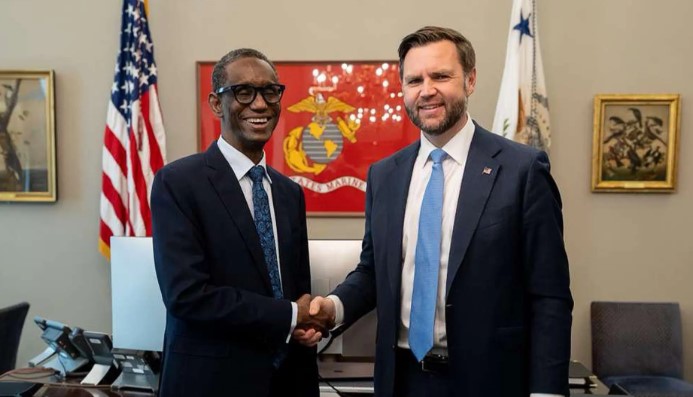
Nigeria and the United States are taking their security relationship into a deeper phase, with fresh high-level talks in Washington focusing on military cooperation, intelligence sharing, counter-terrorism operations and efforts to strengthen Nigeria’s ability to confront increasingly complex security threats.
The renewed engagement followed the second session of the Nigeria–US Joint Working Group, held in Washington on August 12 and 13. Nigeria’s delegation was led by National Security Adviser Nuhu Ribadu, while US Under Secretary of State for Political Affairs Allison Hooker led the American side. A separate round of military discussions followed at the Pentagon.
The meetings signal that the relationship is moving beyond traditional security assistance.
At the Pentagon, Defence Minister Christopher Musa led a senior Nigerian military delegation that included Chief of Defence Staff Christopher Oluyede, Chief of Defence Intelligence Parker Udiandeye and other senior officers. Discussions centred on the two countries' shared security architecture, intelligence collaboration and what officials described as greater operational synergy.
That shift is significant because Nigeria's security problems have become increasingly difficult to contain through conventional military operations alone.
The country continues to face terrorist organisations and other armed groups across several theatres, while instability elsewhere in the Sahel has created additional pressure on Nigeria's borders and security institutions.
Washington therefore sees Nigeria not simply as a country receiving security assistance, but as a strategically important partner in West Africa.
The Nigerian government, meanwhile, wants access to capabilities that can strengthen its own operations, particularly intelligence, surveillance, training and technologies that can help locate and disrupt armed groups before they can mount attacks.
From intelligence sharing to joint operations
The partnership has already moved beyond classroom training and intelligence exchanges.
In June, Nigeria's Defence Headquarters disclosed that the two countries had expanded their cooperation to include joint military strikes against terrorist targets, particularly in the North-East. Military officials said American support had improved intelligence gathering, surveillance, operational planning and precision targeting.
The United States has stressed that its involvement is conducted with Nigerian consent.
US Africa Command officials said the cooperation operates under agreements reached through the Joint Working Group and respects Nigeria's sovereignty and operational independence.
That point is particularly important as foreign military involvement in African security operations remains politically sensitive.
Nigeria is therefore attempting to strike a balance: obtain advanced capabilities and international support while ensuring that its own armed forces remain at the centre of operations on Nigerian territory.
Washington is also looking beyond the battlefield
The latest talks were not restricted to weapons and military operations.
According to the US State Department, the two governments also discussed counter-terrorism prosecutions, terrorism financing, biometric information sharing, law-enforcement capacity and the resettlement of internally displaced people.
The United States acknowledged Nigeria's prosecution of hundreds of Boko Haram and Islamic State West Africa suspects, as well as the expansion of judicial capacity and the recruitment and training of an additional 50,000 police officers.
That reflects a broader understanding of counter-terrorism.
Military force can disrupt an insurgency, but it does not automatically dismantle the networks that finance, recruit and sustain armed groups.
Tracking money, strengthening prosecutions, sharing biometric data and rebuilding communities displaced by violence can therefore be just as important as military operations.
The two sides also discussed returning internally displaced Nigerians to their ancestral communities, an issue that could become increasingly important if security improves in areas previously controlled or threatened by armed groups.
A relationship shaped by wider US concerns
The latest talks also come against the backdrop of Washington's concerns over security and religious freedom in Nigeria.
The Joint Working Group was established within the broader diplomatic framework that followed the US designation of Nigeria as a Country of Particular Concern. The latest meeting addressed the protection of vulnerable communities, accountability for perpetrators of violence and military-to-military cooperation.
For Abuja, however, the security challenge is broader than one religious community.
Nigeria's violence affects different regions and communities, with terrorism, banditry, kidnapping and other forms of criminality creating overlapping security problems.
That makes the current cooperation strategically important for both countries.
For Washington, a more capable Nigeria could help contain instability spreading across West Africa and the Sahel. For Abuja, stronger American intelligence and technical support could help close some of the gaps that have allowed terrorist groups to remain resilient.
The real test is what happens on the ground
The growing relationship is undoubtedly significant, but its success will ultimately be measured away from conference rooms in Washington.
Nigerians will want to know whether better intelligence translates into fewer attacks, whether military cooperation protects communities more effectively and whether displaced families can actually return home safely.
The US-Nigeria partnership has already produced operational gains, according to officials, but American and Nigerian authorities also acknowledge that major challenges remain—including civilian casualties and weaknesses in humanitarian spending transparency.
That means the next stage of cooperation will require more than sophisticated equipment or closer military contacts.
It will require trust, accountability and the ability to convert intelligence into timely action while protecting civilians.
For FollowGlobalTrends, the latest engagement is important because Nigeria-US security relations are no longer simply about one country helping another fight terrorism.
They are evolving into a more structured strategic partnership, involving military operations, intelligence, policing, financial investigations, justice and the rebuilding of communities affected by conflict.
The message from Washington is clear: Nigeria remains central to America's security strategy in West Africa.
And for Nigeria, the challenge is equally clear, turn deeper international cooperation into security that ordinary Nigerians can actually feel.