Nigeria’s 2027 Presidential Race Officially Opens as Tinubu, Obi, Atiku Take Campaign Battle to Voters
Campaigning has officially begun in Nigeria’s presidential race, setting the stage for an increasingly competitive contest ahead of the 2027 general elections.
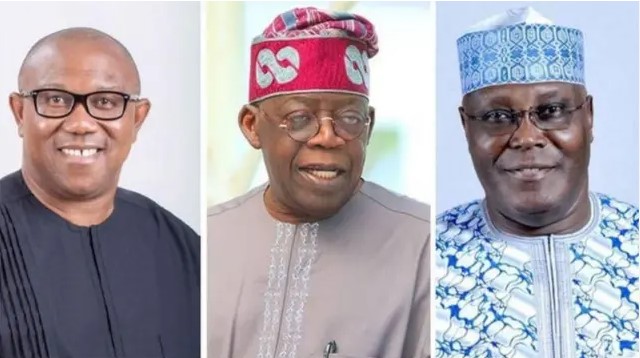
Nigeria’s 2027 presidential contest has officially moved into campaign mode, turning months of political positioning, alliances and speculation into an open battle for the votes that will determine who occupies Aso Rock after the January election.
The campaign season formally began on August 19, giving presidential and National Assembly candidates several months to take their messages to voters before the election. The presidential poll is scheduled for January 16, 2027, according to the electoral timetable.
At the centre of the contest is a familiar trio from 2023: President Bola Tinubu, seeking another term on the platform of the All Progressives Congress (APC); former Vice President Atiku Abubakar, now running under the African Democratic Congress (ADC); and former Anambra State governor Peter Obi, the presidential candidate of the National Democratic Congress (NDC). The three are again preparing to compete for the presidency, although this time on different political platforms.
The political stakes are considerably higher this time. Tinubu enters the campaign as the incumbent with control of the federal government and a ruling party that has expanded its political reach across the country. Reuters reports that the APC now controls 31 of Nigeria’s 36 governorships, giving the president a formidable political structure heading into the election.
But incumbency also means Tinubu's record is now directly on the ballot.
His administration's economic reforms, particularly the removal of the petrol subsidy and changes to the foreign-exchange system, have attracted praise from investors and international financial institutions, but they have also contributed to severe cost-of-living pressures that remain a central concern for ordinary Nigerians. Inflation, food prices, unemployment and insecurity are expected to dominate the campaign conversation as the opposition attempts to turn economic hardship into a referendum on the administration.
Obi and Atiku, meanwhile, face the challenge of converting public dissatisfaction into a sufficiently broad electoral coalition. Their political paths have changed considerably since 2023, and the opposition remains divided despite previous attempts to build a united front against the APC. The fragmentation could once again benefit the incumbent if opposition voters split their support among several candidates.
That makes the campaign more than a contest between personalities. It is also a test of whether Nigeria's opposition can overcome its divisions, build nationwide structures and persuade voters that it offers a credible alternative to the ruling party.
The first signs of the tone of the campaign have already emerged. On Tuesday, several presidential candidates, including Tinubu and Obi, signed a National Peace Accord committing themselves to issue-based campaigns and rejecting violence, hate speech, misinformation and personal attacks. Atiku and the ADC were notably absent from the ceremony.
The agreement comes against a backdrop of concern about political violence and the spread of inflammatory content during Nigerian elections. The National Peace Committee has warned candidates and supporters that the 2027 contest must not become another cycle of violence, while Obi has urged voters to reject politicians who violate the peace agreement.
For voters, however, the real campaign will ultimately be judged by what candidates offer beyond political slogans.
Nigeria is entering the election with a population dealing with economic pressure, security concerns and growing demands for better public services. The electorate will be listening for concrete answers on jobs, food security, education, healthcare, infrastructure, energy and the cost of doing business—not simply promises to defeat political opponents.
The campaign will also test whether the major contenders can reach beyond their traditional regional and political bases. The 2023 election demonstrated how powerful regional voting patterns can be, while the current race has already raised questions about whether candidates can build the broad national coalition required to secure the presidency.
With the campaign now officially open, Nigeria's political conversation is moving from who might run to who can actually win.
For Tinubu, the task is to convince voters that his reforms are beginning to deliver enough benefits to justify another term. For Obi and Atiku, it is to convince Nigerians that they can turn dissatisfaction with the current government into a winning national coalition.
The coming months will determine which message resonates most.
Nigeria has entered the campaign season, but the real contest will not be won by the loudest rally or the biggest crowd. It will be decided by whether candidates can convince millions of voters that their vision for the next four years is better than the alternatives.