Jobs & Careers: Five Developments Set to Shape the Week Ahead
From hiring trends to workplace shifts, five key developments are set to shape the jobs and careers landscape in the week ahead.
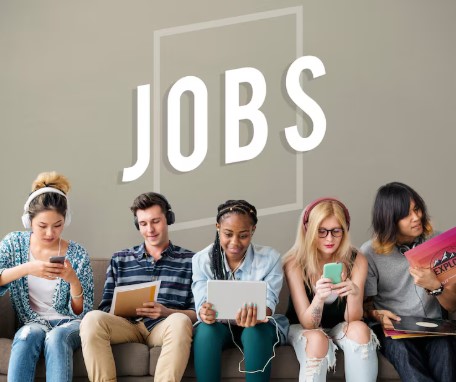
For job seekers, employees and employers, the week ahead arrives with a labour market that is becoming harder to read. Artificial intelligence is changing how companies recruit and organise work, technology firms continue to announce job cuts, while employers are placing greater emphasis on practical skills and adaptability.
Here are five developments worth watching.
1. AI is moving from workplace experiment to hiring requirement
Artificial intelligence is increasingly becoming a workplace skill rather than a specialist advantage reserved for software engineers. Employers are looking for people who can use AI to improve productivity, analyse information, automate routine tasks and make better decisions.
Research and labour-market analysis published this year suggests AI will reshape a substantial share of existing jobs rather than simply eliminate them. Boston Consulting Group estimates that roughly 50% to 55% of US jobs could be reshaped by AI, while a smaller share could ultimately disappear through automation.
That shift is already visible in recruitment. Job listings are increasingly combining traditional professional requirements with AI-related capabilities, making digital fluency a useful advantage for candidates across industries.
For workers, the message is becoming difficult to ignore: learning how to work alongside AI may be more valuable than simply worrying about whether AI will replace a particular job.
2. Entry-level workers face a tougher starting line
One of the biggest concerns surrounding AI is its potential impact on people trying to enter the workforce.
Employers are increasingly able to automate some of the routine tasks traditionally assigned to graduates and junior employees, potentially reducing the number of conventional entry-level positions available.
The British Chambers of Commerce reported that 38% of employers planned to hire fewer graduates specifically because of AI, citing findings from the 2026 Randstad Workmonitor.
That does not mean graduate opportunities are disappearing altogether. Instead, the first rung of the career ladder is changing. Young professionals may increasingly need to demonstrate useful skills, portfolios, work experience and evidence of problem-solving rather than relying on academic qualifications alone.
3. Tech layoffs remain part of the employment story
The technology sector continues to experience a difficult adjustment as companies rethink costs, workforce structures and investment priorities.
More than 170,000 technology jobs had reportedly been lost globally by the beginning of August, according to a recent Yahoo Finance/TechCrunch analysis tracking 2026 cuts. Major companies have continued restructuring even as investment in AI expands.
The important point, however, is that layoffs should not automatically be interpreted as evidence that the entire technology industry is shrinking.
The sector is undergoing a redistribution of demand. Some traditional roles are being reduced while companies continue recruiting for artificial intelligence, cybersecurity, data, cloud infrastructure and other specialised positions.
For professionals, this means the question is shifting from “Is tech still hiring?” to “Which parts of tech are hiring—and what skills do they want?”
4. Skills are becoming as important as certificates
The old career formula of earn a degree, build experience and gradually move up the ladder s being supplemented by a more skills-driven model.
Employers are increasingly interested in what candidates can actually demonstrate. Hays identifies skills such as AI capability, adaptability and authenticity among major workplace trends for 2026, while broader hiring research points toward growing emphasis on skills rather than credentials alone.
That is particularly relevant for younger workers and career changers.
A candidate who can demonstrate measurable results through projects, freelance work, internships, certifications or a strong portfolio may have an advantage over someone whose CV contains qualifications but little evidence of practical application.
The implication is straightforward: learning does not end when school ends.
5. Remote work is becoming a hiring strategy, not simply an employee benefit
Remote work continues to influence how companies build teams and where they find talent.
New research into startups suggests that greater use of remote work can help young companies recruit people whose skills complement those already available within the organisation. Rather than treating remote work merely as an employee perk, the research suggests it can function as a mechanism for accessing talent beyond a company's immediate geographical labour market.
That could have particular significance for professionals in emerging markets.
For talented workers in Africa, Asia and other regions, remote employment can create opportunities to compete for international roles without relocating. But competition also becomes global: a Nigerian developer may now be competing not only with candidates in Lagos or Abuja, but with professionals from dozens of countries.
The bigger career picture
Taken together, these developments point toward a labour market where adaptability is becoming a career asset in its own right.
AI is changing tasks. Employers are reassessing entry-level hiring. Technology companies are restructuring. Skills-based recruitment is gaining ground, and remote work is widening the geographical competition for talent.
But the picture is not simply one of jobs disappearing.
New opportunities are emerging alongside the disruption. Current Nigerian job listings, for example, show demand for AI engineers, software professionals, digital specialists and other technology-related roles.
The challenge for workers is therefore not merely to find a job, but how to remain relevant as the definition of a valuable worker changes.
For FollowGlobalTrends, the lesson from the week ahead is clear: the strongest careers may belong to people who combine human judgment, communication and creativity with the ability to use new technology effectively.
The workplace is changing quickly. The workers who keep learning may be the ones best positioned to change with it.