
‘I Came to Mourn, Not Campaign’: Peter Obi Speaks After Benue Incident
Peter Obi says his humanitarian visit to Benue’s Yelwata community was blocked by hired thugs, reigniting concerns over insecurity and political intolerance in Nigeria.
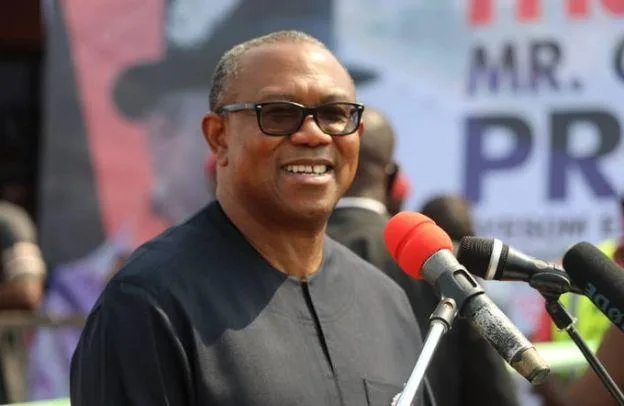
Nigeria's frontline opposition figure and NDC party presidential candidate Peter Obi has alleged that hired thugs prevented him from reaching the Yelwata community in Benue State during a humanitarian visit intended to console families affected by one of Nigeria’s deadliest recent massacres.
In a statement released after the incident, Obi said he travelled from Abuja to Benue on a “purely humanitarian mission” and arrived in the state at about 9:00 a.m. His objective, he said, was to mourn with grieving families, listen to survivors and offer support following the killings in Yelwata, where reports indicate that more than 270 people lost their lives in a brutal attack.
According to Obi, his convoy was stopped before reaching the community by a group of men chanting “Peter Obi, go back.” He alleged that the attackers were hired thugs and described the confrontation as deeply troubling, arguing that compassion for victims should never become a casualty of political rivalry.
Obi contrasted the experience with what he called his own approach to democratic engagement. He noted that only a day earlier, he had attended the opening of an opposition presidential campaign office in Abuja hosted by Governor Seyi Makinde, saying his presence reflected his belief that political competition should be conducted with mutual respect and civility rather than hostility.
The former Anambra governor insisted that his Benue visit was not connected to campaign activities, stressing that his focus was solely on expressing solidarity with families devastated by violence. “I came to Benue not for partisan politics,” he said, “but to mourn with our people and offer comfort at a moment of unimaginable sorrow.”
Neither the Benue State Government nor security agencies had publicly confirmed Obi’s allegation that the group was sponsored at the time of reporting. Authorities have, however, continued investigations into the wider Yelwata killings, which have intensified national debate over rural insecurity and the protection of farming communities in Benue State.
The Yelwata massacre has become one of the defining security tragedies of the year, prompting widespread condemnation from political leaders, civil society organizations and humanitarian groups. The attack renewed calls for stronger protection of vulnerable communities and more decisive action against armed groups responsible for recurring violence in Nigeria’s Middle Belt.
Although Obi said he was ultimately unable to enter the community, he maintained that his thoughts and prayers remain with the victims and pledged to continue advocating for the protection of Nigerian lives. His statement framed the incident as a reminder that citizens should be free to travel, mourn and support one another without fear or political intimidation.
Beyond the immediate controversy, the episode underscores two of Nigeria’s most pressing democratic challenges: persistent insecurity and the shrinking space for peaceful civic engagement. As communities struggle to recover from devastating violence, the ability of humanitarian and political leaders to reach victims safely has become an increasingly important test of both governance and national unity.