Enugu Govt Opens Bids for Sale of Assets at ESBS, Stadium, Water Corporation
Enugu State has opened a fresh bidding process for the disposal of selected government assets in Enugu and Lagos, with bids due by August 28.
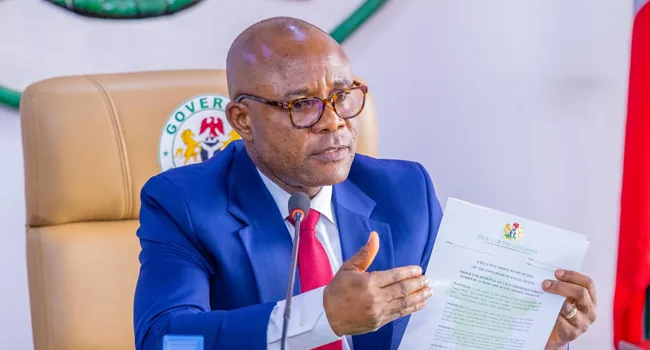
The Enugu State Government has invited interested and qualified bidders to submit offers for the purchase of selected government-owned assets, including properties associated with the Enugu State Broadcasting Service (ESBS), Enugu State Water Corporation, Nnamdi Azikiwe Stadium and the state’s Lagos Liaison Office.
The invitation was issued by the state Ministry of Finance and Economic Development as part of the government’s procurement process for disposing of the specified assets. The ministry said the exercise is being conducted under the Enugu State Public Procurement Law, 2021.
Under the timetable published by the ministry, completed bid documents must be submitted by Friday, August 28, 2026. Bids are to be placed in sealed envelopes marked “Bid Document”, with the bidder’s name written on the reverse, and addressed to the Commissioner for Finance and Economic Development at the ministry’s office in the Old Eastern House of Assembly Complex, GRA, Enugu.
The bids are scheduled to be opened publicly at 10 a.m. on August 28 at the ministry’s conference room in Enugu. Prospective bidders seeking further information about the assets were directed to contact officials in the ministry’s Planning, Research and Statistics department or the office of the Permanent Secretary.
The government's notice does not, in the information publicly reported so far, provide detailed valuations for each asset or explain the individual reasons for putting the properties up for sale. It therefore remains unclear whether the disposal is primarily aimed at raising revenue, reducing the cost of maintaining underutilized government property, restructuring public assets or a combination of those objectives.
The move is taking place against the backdrop of a broader effort by the administration of Governor Peter Mbah to overhaul the state's public finances and government institutions. The state has increasingly promoted private-sector participation, commercialization and more efficient use of public resources as part of its economic development agenda.
There is also precedent for the state using competitive bidding in the disposal of public assets. In 2024, the Enugu Ministry of Finance and Economic Development published an invitation for interested and competent bidders to submit offers for government assets, also citing the requirements of the state's 2021 procurement law.
The latest process is particularly notable because some of the institutions connected to the assets remain active government entities. ESBS, for example, continues to operate as the state's broadcast media agency, providing radio and television services and describing its role as informing, educating and entertaining audiences in Enugu and beyond.
Similarly, the inclusion of assets associated with the Water Corporation comes as the state continues to pursue investments in its water infrastructure. Earlier this year, the Enugu State Water Corporation advertised a major project involving the installation of 17,000 prepaid water connections and the development of a customer service centre for part of the state water supply system.
The planned disposal of assets linked to Nnamdi Azikiwe Stadium also comes at an interesting moment for Enugu's sports infrastructure. The state is preparing to host the 2026 National Sports Festival, with officials and organizers recently inspecting sports facilities and other infrastructure ahead of the Coal City Games.
That timing makes the exact nature of the stadium-related asset particularly important. The government's notice identifies assets for sale but, based on the available details, does not establish that the entire stadium complex itself is being sold. That distinction matters because the stadium remains part of the state's sports infrastructure and is being considered in preparations for major sporting events.
The process will therefore attract attention not only from prospective investors but also from residents and civil society groups interested in how public property is valued, transferred and ultimately used. Enugu's procurement system provides an electronic platform intended to support tender notifications, bid preparation, evaluation and award processes, while the state's procurement framework is designed to improve transparency and compliance in public contracting.
For the government, the immediate test will be whether the exercise produces credible competition and value for assets that belong to the public. For potential buyers, the short deadline means due diligence on ownership, title, physical condition, valuation and any restrictions attached to the properties will be critical before bids are submitted.
The broader significance is that Enugu is increasingly treating government assets as part of a wider economic-management question rather than simply as properties to be maintained indefinitely. If the disposal is conducted transparently and produces fair value, it could strengthen the state's drive to unlock dormant public resources. But because some of the assets are tied to essential services, public broadcasting, sports and government representation, the quality of the valuation and the openness of the eventual transactions will matter just as much as the revenue generated.