DRC Opposition Rejects Tshisekedi’s National Dialogue Proposal
DR Congo’s main opposition coalition has rejected President Félix Tshisekedi’s proposed national dialogue, accusing his administration of setting the terms of a process that should be independently negotiated.
The Democratic Republic of Congo’s main opposition coalition has rejected President Félix Tshisekedi’s proposed national dialogue, deepening an already tense political standoff over the country’s security crisis, constitutional future and the 2028 presidential election.
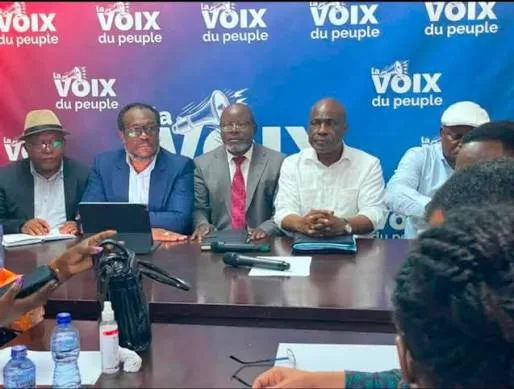
The Coalition Article 64 (C64), which brings together several prominent opposition figures including Martin Fayulu, Moïse Katumbi, Jean-Marc Kabund, Augustin Matata Ponyo and Delly Sesanga, announced its rejection on Friday, a day after Tshisekedi outlined his plans for a three-month national dialogue.
Tshisekedi presented the initiative as a “National Dialogue for Peace, Cohesion and the Refoundation of the State”, saying it would address the structural causes of the country’s recurring political, institutional and security crises. According to the presidency, the process will last no more than three months and is intended to move beyond previous political negotiations that, in the president’s view, too often focused on sharing positions rather than strengthening state institutions.
The president has also drawn a clear line around participation. He said those who have taken up arms against the constitutional order would not be allowed to participate, effectively excluding the AFC-M23 rebel alliance from the proposed process. At the same time, Tshisekedi said people would not be excluded because of their political opinions, criticism of the government, provincial origin, language, ethnicity or religion.
For the C64, however, the problem is not simply who is invited but who controls the process. The coalition argues that the consultations announced by Tshisekedi do not amount to the genuinely inclusive and consensual national dialogue that opposition groups have been demanding. It says the framework, objectives and procedures appear to have been determined by the presidency rather than negotiated between the political and social forces expected to participate.
The opposition has also linked its rejection to the increasingly sensitive debate over the Constitution. C64 leaders accuse Tshisekedi of using the country's security and social difficulties to create political space for constitutional changes that could allow him to remain in power beyond the end of his current mandate. Those are opposition allegations, not an established fact, and Tshisekedi has not said that the dialogue is intended to secure a third presidential term.
The dispute is unfolding as the security situation in eastern Congo remains one of the country's most serious challenges. Fighting involving the M23 rebellion and other armed groups has displaced large numbers of civilians, while international efforts have sought to reinforce a ceasefire and advance a political settlement. A ceasefire monitoring mechanism linked to a Qatar-mediated peace agreement began deploying in eastern Congo earlier this week, adding another diplomatic track to the country's already crowded search for peace.
The question of political legitimacy is meanwhile becoming harder to separate from the security crisis. Tshisekedi argues that a national conversation is necessary to rebuild cohesion and address the deeper weaknesses that have repeatedly destabilised the country. His opponents fear that a process organised under the authority of the sitting president could instead strengthen the government's political position at a crucial moment.
The C64 has responded by calling for a national march on September 15 to oppose what it describes as attempts to alter the constitutional order. The coalition's decision means the proposed dialogue begins without the participation of some of the country's most prominent opposition figures, raising doubts about whether Tshisekedi can achieve the broad political consensus he says the process requires.
The disagreement also reflects a wider problem that has repeatedly frustrated efforts to resolve Congo's political crises: the government and opposition may agree that dialogue is necessary while remaining deeply divided over what genuine dialogue should look like. With the 2028 presidential succession already becoming a source of political tension and war continuing in the east, Tshisekedi now faces the difficult task of convincing sceptical opponents that his initiative is a national process rather than a government-led exercise.
The broader significance is that Congo's proposed dialogue could become an important test of whether its political class can find common ground while the country confronts war, displacement and institutional uncertainty. If the opposition stays outside the process, the dialogue risks producing agreements without the political legitimacy needed to make them durable. But if Tshisekedi can create credible guarantees around participation, transparency and the constitutional question, the initiative could still become a platform for easing tensions rather than another chapter in Congo's long history of contested political settlements.