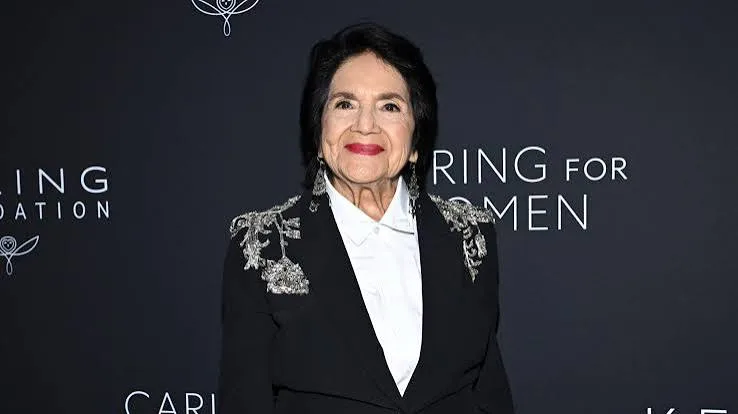
American civil rights icon Dolores Huerta dies at 96, leaving behind a lasting legacy of grassroots leadership. Her family announced that she passed away peacefully on Wednesday at her home in Bakersfield, California, surrounded by loved ones.
Huerta was one of the most influential Hispanic figures in modern history. Alongside fellow organiser Cesar Chavez, she cofounded the National Farm Workers Association in 1962, which later became the United Farm Workers (UFW). Her work transformed the American labor movement and brought national visibility to immigrant workers.
A family spokesperson, Erik Olvera, confirmed that she died following a battle with cancer. Relatives requested privacy as they mourn, describing her as an enduring inspiration whose courage transformed millions of lives across the globe.
Born Dolores Clara Fernandez in Dawson, New Mexico, on April 10, 1930, she grew up in the agricultural community of Stockton, California. She trained as a schoolteacher before deciding that community organizing offered a direct path to fighting poverty. She witnessed hungry children in classrooms and resolved to help their parents secure fair wages.
During the 1960s, Huerta served as the chief contract negotiator for striking grape pickers. She helped direct the Delano grape strike and spearheaded consumer boycotts across North America. Her strategic acumen forced major agribusiness corporations to recognize worker rights and sign collective bargaining agreements.
Her advocacy challenged deep-seated prejudices in American society. At a time when women were rarely seen leading major labor unions, Huerta commanded rallies with a bullhorn. She negotiated contracts fearlessly, faced police batons, and was arrested more than two dozen times during peaceful protests.
Huerta’s impact reached far beyond agricultural fields. In 1972, during a farmworkers' strike in Arizona where leaders faced political pressure, she coined the iconic phrase “¡Sí, se puede!” (“Yes, we can”).
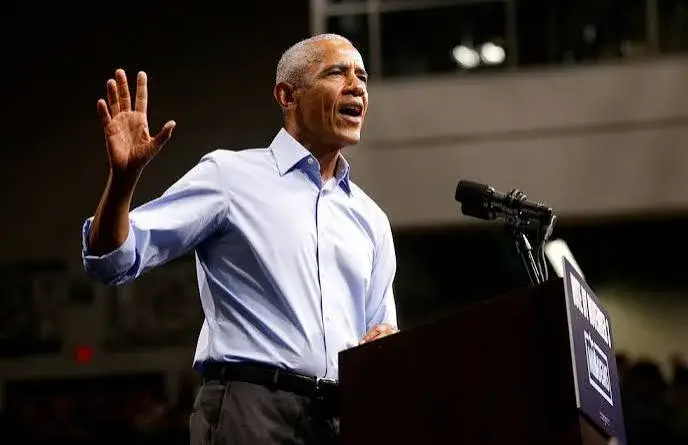
The three-word motto became a universal rallying cry for social justice movements worldwide. Decades later, it served as the inspiration for Barack Obama’s 2008 presidential campaign slogan.
In 2012, President Obama awarded Huerta the Presidential Medal of Freedom, the highest civilian honor in the United States. During the ceremony, he commended her relentless spirit and acknowledged her role in opening doors for generations of civic leaders.
Even in her 90s, Huerta remained actively engaged in public life. Through the Bakersfield-based Dolores Huerta Foundation, she championed civic education, voting rights, reproductive rights, and local infrastructure projects.
Huerta was also a mother of 11 children, balancing motherhood with relentless activism. She continually reminded organizers that real social change begins in neighborhood living rooms, not corporate boardrooms.
Her passing marks the end of an era in American labor history. Tributes from civic groups, elected officials, and labor leaders around the world continue to pour in, celebrating a woman whose determination redefined the fight for human dignity.