‘Deduct Your $18.5m From Our $61bn’: Onoh’s Fiery Response to South Africa
Onoh has challenged South Africa’s $18.5 million repatriation demand, arguing that Nigeria spent billions supporting the country’s liberation struggle.
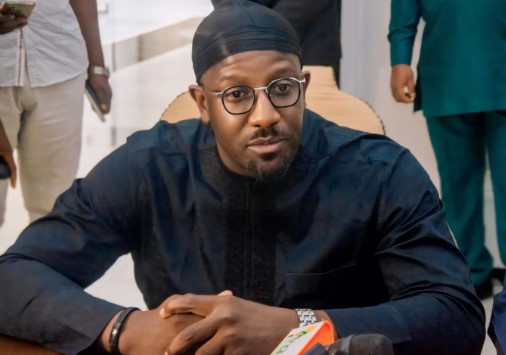
A fresh diplomatic row is brewing between Nigeria and South Africa after Nigerian political figure Denge Josef Onoh rejected Pretoria’s demand for reimbursement of about $18.5 million spent repatriating foreign nationals, telling South Africa to consider the far larger contribution Nigeria made to the country’s liberation from apartheid.
Onoh, a former South-East spokesman for President Bola Tinubu, described the South African demand as an unacceptable attempt to turn the costs of its immigration enforcement operations into a debt owed by other African governments.
His response followed confirmation from South Africa’s Department of Home Affairs that it had written to Nigeria, Malawi and Ethiopia seeking reimbursement for expenses incurred during a recent crackdown on undocumented migrants and the subsequent repatriation of foreign nationals.
South African Home Affairs Director-General Tommy Makhode told Parliament’s Portfolio Committee on Home Affairs that the department had spent about R292 million, equivalent to roughly $18.5 million, on the operation, far above its original R60 million allocation for deportations.
More than 82,000 foreign nationals had been processed through repatriation centres by August 6, according to figures presented by the department. Pretoria has now asked the affected governments to reimburse the costs.
Onoh's answer was emphatic: Nigeria should not pay. Instead, he argued that if South Africa wants to reduce its relationship with Nigeria to a financial transaction, then Pretoria should also account for the historical support Nigeria provided during the struggle against apartheid. “If a refund is what Pretoria seeks, South Africa must deduct this repatriation bill from its massive, outstanding historical indebtedness to Nigeria,” Onoh said.
The $61bn argument
At the centre of Onoh's response is the frequently cited estimate that Nigeria contributed about $61 billion to the anti-apartheid struggle between 1960 and 1994. Importantly, that figure does not represent a single payment made by Nigeria to South Africa. It is an estimate of cumulative financial, diplomatic, humanitarian and other support provided over several decades.
A June 2026 fact-check by Dubawa traced the estimate to research by the South African Institute of International Affairs (SAIIA) and concluded that historical records support the figure, while stressing that it represents cumulative support rather than a one-off cash contribution.
Nigeria was one of the most prominent African supporters of the anti-apartheid movement. It provided diplomatic backing, supported liberation movements and assisted South Africans affected by apartheid, while also playing a role in broader efforts to pressure the apartheid government internationally.
That history has now become the ammunition for Onoh's response to Pretoria. His argument is essentially that South Africa should not approach Nigeria solely as a government whose citizens have generated costs for South African immigration authorities while overlooking the decades when Nigeria spent resources supporting South Africans fighting for political freedom.
A dispute bigger than the money
The $18.5 million reimbursement request is relatively small compared with the size of Nigeria's claimed historical contribution.
But the dispute is about more than the difference between the two figures.
South Africa says it incurred unbudgeted expenses as its authorities dealt with a surge in deportations and repatriations. Home Affairs officials have indicated that transport accounted for a significant part of the expenditure and that the department had exceeded its original budget several times over.
Onoh, however, argues that South Africa cannot simply convert the operational costs of enforcing its own immigration laws into a bill for foreign governments without establishing a clear legal and diplomatic basis for reimbursement.
He has called for Nigeria to seek clarification through diplomatic channels and to coordinate with other affected countries.
The dispute also comes against the backdrop of renewed tensions surrounding the treatment of African migrants in South Africa.
Xenophobia enters the conversation
Onoh has linked Pretoria's reimbursement demand to the broader question of how Nigerian citizens and businesses are treated in South Africa.
He accused South African authorities of failing to adequately protect foreign-owned businesses and property during episodes of xenophobic violence and argued that Nigerian nationals have suffered substantial economic losses.
He has therefore called for a broader assessment of losses suffered by Nigerians and other African nationals, suggesting that Nigeria could pursue compensation if South Africa continues with what he described as an increasingly hostile approach.
That raises a much larger question about the relationship between two of Africa's biggest economies.Nigeria and South Africa have deep commercial, diplomatic and people-to-people ties. Thousands of Nigerians live, work and operate businesses in South Africa, while South African companies maintain major investments in Nigeria.
A prolonged diplomatic dispute over repatriation costs could therefore have consequences well beyond the original $18.5 million claim. South Africa's request has not yet produced a payment
So far, there is no indication that Nigeria has agreed to reimburse South Africa.
The South African authorities have confirmed that requests were sent through diplomatic channels and that they are awaiting responses from the affected governments. Nigeria's federal government has not, at the time of writing, formally adopted Onoh's proposed $61 billion offset argument as its official position.
That distinction is important.
Onoh is a prominent political figure and former presidential spokesman, but his comments should not be interpreted as a formal Nigerian government counterclaim unless Abuja subsequently adopts them through its diplomatic machinery.
Still, his intervention has injected a powerful historical argument into an otherwise straightforward reimbursement dispute.
For FollowGlobalTrends, the real significance of the row lies in the uncomfortable collision between today's migration politics and yesterday's liberation history. South Africa is asking African governments to help pay the cost of returning their citizens. Onoh is effectively asking Pretoria to remember who stood beside South Africans when the country was fighting to free itself from apartheid.
The immediate bill is $18.5 million. The historical account Onoh has put on the table is $61 billion. Whether those figures can, or should, be placed on the same diplomatic ledger is now a question for the governments of Nigeria and South Africa.
But one thing is clear: what began as a reimbursement dispute has quickly become a much bigger argument about history, solidarity, migration and the price of African friendship.