
Datti Says Tinubu, Obi and Atiku Are Not Nigeria’s Answer in 2027
Former Labour Party vice-presidential candidate Yusuf Datti Baba-Ahmed says neither President Bola Tinubu nor his leading challengers, including Peter Obi and Atiku Abubakar, can deliver the fundamental change Nigeria needs.
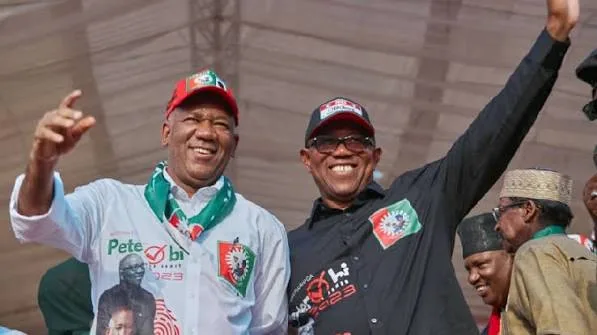
Former Labour Party vice-presidential candidate Yusuf Datti Baba-Ahmed has declared that President Bola Tinubu, Peter Obi, Atiku Abubakar and other prominent contenders for the 2027 presidency are unlikely to transform Nigeria, arguing that the country needs a complete departure from its traditional political establishment.
Speaking during a political interview, Datti said Nigeria’s recurring governance challenges cannot be solved simply by rotating power among familiar political figures. According to him, the nation’s problems are rooted in deeper structural failures that require a new generation of leadership rather than recycled political personalities.
The remarks place Datti at odds with some of the country’s most influential opposition figures, including Peter Obi, with whom he contested the 2023 presidential election on the Labour Party ticket. While he did not dismiss the individuals’ political relevance, he argued that none represents the kind of transformative leadership capable of fundamentally changing Nigeria’s trajectory.
Datti also criticized the broader political culture, saying successive administrations have struggled to address insecurity, unemployment, inflation and declining public confidence in government. In his view, elections have too often become contests between established elites instead of opportunities to redefine governance and accountability.
His comments come as Nigeria’s 2027 presidential race gathers momentum following the commencement of official campaigns in August. President Tinubu is seeking a second term, while opposition parties are positioning candidates and negotiating alliances in what is expected to be one of the country’s most competitive elections since the return to democratic rule in 1999.
Political observers say Datti’s intervention is significant because it reflects growing debate within the opposition itself over strategy and leadership. Rather than focusing solely on defeating the ruling party, his remarks raise broader questions about whether Nigeria’s political class, across party lines, is capable of delivering the reforms many citizens demand.
Although neither Tinubu, Obi nor Atiku had officially responded to Datti’s latest comments at the time of reporting, the statement is likely to intensify discussions over the direction of the opposition and the qualities voters should prioritize ahead of the 2027 election.
As campaigns unfold, Datti’s challenge goes beyond individual candidates. It speaks to a wider national conversation about whether meaningful progress will come from changing governments, or changing the political culture that has shaped Nigeria’s governance for decades.