Biya Returns to Cameroon After Longest Absence, Ending Weeks of Health Speculation
He returned with his wife, Chantal Biya, after 73 days in Geneva.
President Paul Biya has returned to Cameroon after more than two months in Switzerland, ending a 73-day absence that had fuelled intense speculation over his health and raised fresh questions about the country’s political leadership.
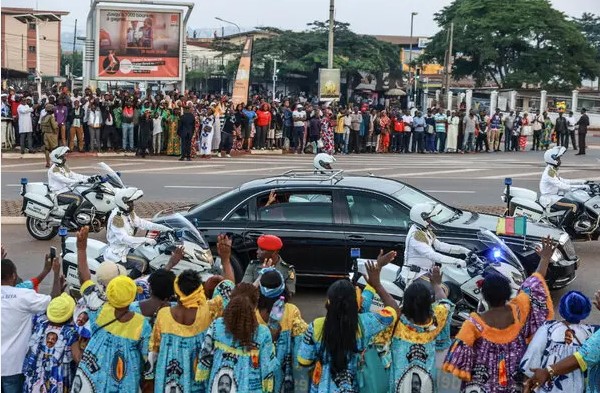
Biya, 93, arrived at Yaoundé’s Nsimalen International Airport on Thursday, August 20, aboard a chartered flight from Geneva. He was accompanied by First Lady Chantal Biya and was later driven to the Etoudi Unity Palace, waving to supporters gathered along the route. Reuters reported that the president arrived at about 4:45 p.m. local time.
The president left Cameroon on June 7 with his wife for what the presidency described at the time as a “brief private stay” in Europe. The official statement did not give a return date, and the trip eventually became the longest recorded absence of Biya’s presidency. The presidency's own website confirms that Biya and Chantal Biya departed Yaoundé together on June 7.
His prolonged stay in Geneva became a major political talking point inside Cameroon. Although government officials repeatedly rejected suggestions that Biya was incapacitated, the lack of public appearances and detailed information about his condition encouraged speculation about his health and whether the government was functioning normally in his absence. The Guardian had reported in July that officials described reports of serious illness as false and said the president continued working from Geneva.
The return was met by supporters of Biya’s ruling Cameroon People's Democratic Movement, or CPDM, who gathered around the airport and along parts of the route into Yaoundé. Images and reports from the arrival showed supporters carrying party colours and messages welcoming the veteran leader back to the capital.
But Biya’s return does not erase the political questions that accumulated during his absence. Opposition figures had called for scrutiny of whether the country required an interim leadership arrangement, particularly if the president were unable to perform his duties. No such intervention was made by the Constitutional Council.
The issue has become more sensitive because Cameroon recently reintroduced the office of vice-president as part of a constitutional overhaul, but Biya has not appointed anyone to the position. Under the constitutional framework, the president of the Senate is expected to assume interim presidential duties if the office becomes vacant because of death, resignation or permanent incapacity.
Biya's age and extraordinary longevity in power add another layer to the debate. He has governed Cameroon since 1982 and, following his victory in the disputed October 2025 presidential election, began another term in November. He remains the world’s oldest sitting head of state. His government has faced long-running security challenges, including the Boko Haram insurgency in the Far North and separatist conflict in the country's English-speaking regions.
The latest episode also highlights the unusual nature of presidential power in Cameroon. Biya has historically spent extended periods outside the country, particularly in France and Switzerland, while key officials and members of his political establishment handle much of the day-to-day administration. His latest absence, however, lasted considerably longer than previous trips and came at a time when questions about succession and the direction of the country were already becoming more prominent.
For now, the immediate fact is simple: Paul Biya is back on Cameroonian soil, alongside Chantal Biya, after 73 days abroad. But the attention generated by his absence has exposed a much bigger issue that his return alone cannot settle, how Cameroon will manage political continuity and succession in a country led for more than four decades by a president now in his nineties. The episode has once again placed the question of what comes after Biya at the centre of Cameroon’s national conversation.