
Atiku Vows to Reopen Nigeria’s Borders, Develop Southern Ports If Elected
Atiku Abubakar says an ADC government would reopen Nigeria’s land borders and develop southern ports as part of a broader plan to expand trade and reduce pressure on existing gateways.
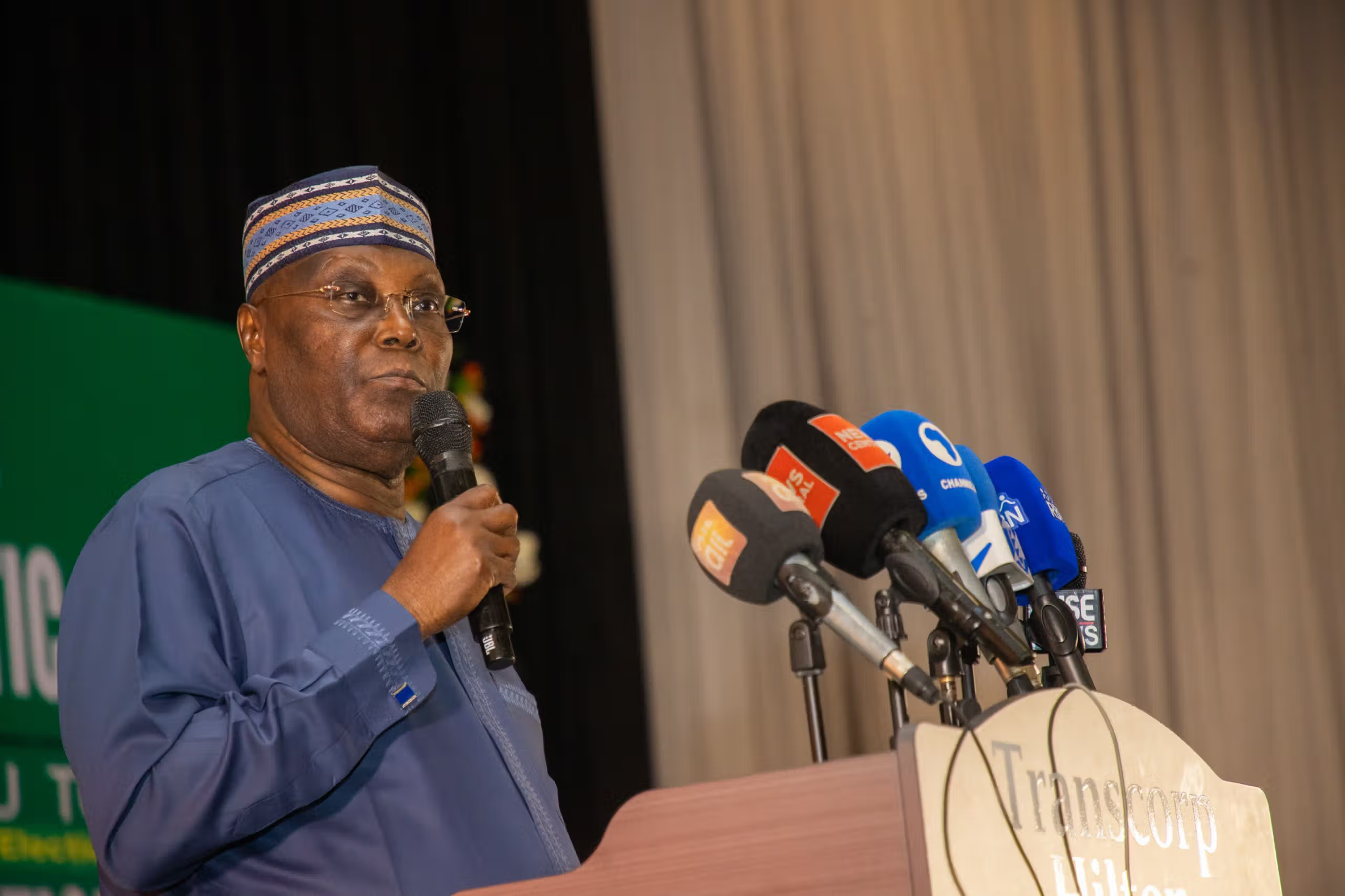
Former Vice President and African Democratic Congress (ADC) presidential candidate Atiku Abubakar has promised to reopen Nigeria’s land borders and develop more ports in the southern part of the country if elected president.
Atiku made the pledge in a video circulated online on Friday and shared by ADC chieftain Dele Momodu, setting out what he described as a different approach to Nigeria’s trade and economic management.
The former vice president said his administration would restore the movement of legitimate goods and people across Nigeria’s land borders while expanding maritime infrastructure beyond the country’s traditional concentration around Lagos. His comments come as the 2027 political contest begins to take shape, with Atiku emerging as one of the leading opposition figures challenging President Bola Tinubu.
The border pledge carries particular economic significance. Nigeria relies heavily on regional trade with neighbouring countries, while border communities and businesses have long complained about the effects of restrictions, delays and enforcement measures on legitimate commerce. Atiku's proposal suggests a shift towards greater openness, although reopening borders would still require measures to control smuggling, arms trafficking and other forms of illicit cross-border activity.
His position also comes against the backdrop of Nigeria's long-running struggle with the efficiency and capacity of its ports. Lagos remains the country's dominant maritime gateway, but congestion, inadequate infrastructure and high logistics costs have historically made Nigerian ports less competitive than some neighbouring facilities.
The Federal Government is already pursuing a major port modernization programme. The Nigerian Ports Authority says cargo throughput rose to more than 129 million metric tonnes in 2025, while its current reform programme includes infrastructure upgrades, automation and the National Single Window system aimed at reducing bureaucratic delays in trade.
The government has also approved additional deep-sea ports to complement existing facilities and strengthen Nigeria's position as a regional maritime hub. Marine and Blue Economy Minister Adegboyega Oyetola said in May that the approvals were intended to improve supply-chain resilience and make Nigerian ports more attractive to vessels serving West and Central Africa.
That means Atiku's proposal is entering an area where the Tinubu administration is already claiming progress. The Nigerian Ports Authority says its $1 billion modernization programme is designed to overhaul ageing quay walls, deepen channels and automate port infrastructure, while the government is also seeking to expand the number of operational maritime gateways.
The difference is likely to be in emphasis and political execution. Atiku is presenting border openness and a more geographically distributed port network as part of his economic vision, while the current administration is highlighting infrastructure investment, digitalization and reforms intended to make existing and new facilities more efficient.
There is a substantial practical challenge behind either approach. Building additional ports alone will not necessarily make Nigeria a stronger trading nation if cargo evacuation remains slow, roads and rail connections are inadequate, customs procedures remain cumbersome or businesses face unpredictable regulation. The same applies to reopening borders: greater access to regional markets could stimulate commerce, but without effective customs and security systems it could also increase opportunities for illicit trade.
The political argument is therefore moving beyond whether Nigeria should trade more openly to a more fundamental question of how the country should connect its producers and consumers to regional and global markets. Atiku's promise puts borders and ports at the centre of that debate, while the government's existing maritime reforms provide a benchmark against which any opposition alternative will ultimately be judged.
As Nigeria heads towards another election cycle, trade infrastructure is becoming part of a much larger contest over the country's economic direction. Whether through Atiku's proposed reopening of borders and expansion of southern ports or the Tinubu administration's ongoing modernization drive, the underlying challenge remains the same: turning Nigeria's enormous market, strategic coastline and regional position into a genuine advantage for businesses, exporters and ordinary Nigerians rather than allowing inefficiencies at the border and the port to become another tax on economic growth.