Atiku Hits Back at Tinubu Over Fuel Subsidy, Says Suffering Is Not Economic Policy.
Atiku Abubakar has hit back at President Bola Tinubu after the President accused him of economic ignorance over his plan to reintroduce a targeted fuel subsidy.
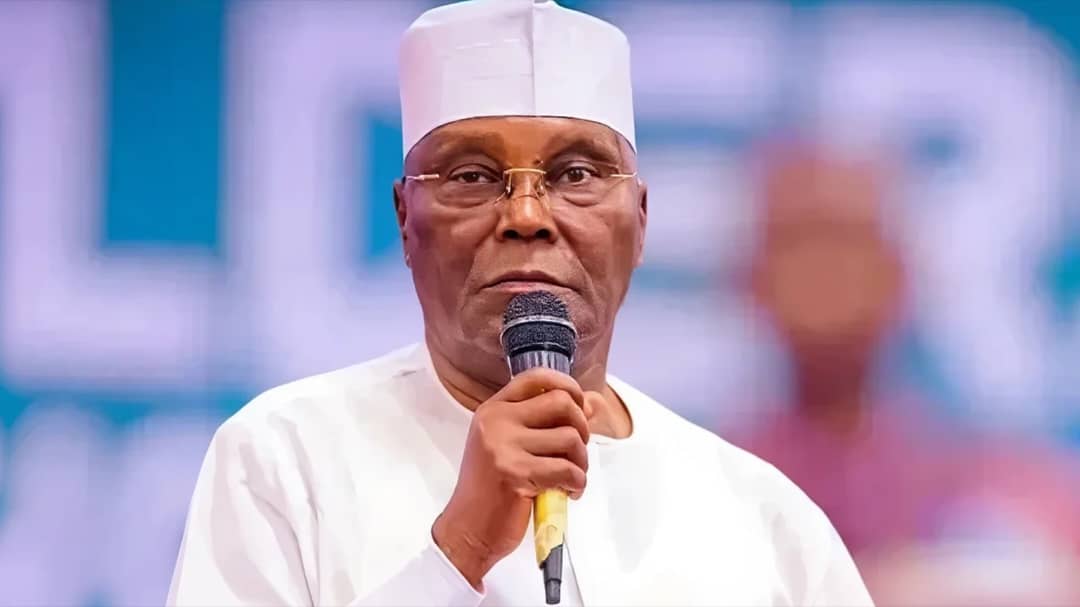
The political fight over Nigeria’s fuel subsidy has escalated into a fresh exchange between President Bola Tinubu and former Vice President Atiku Abubakar, with Atiku accusing the President of lacking the credibility to lecture anyone on economic management.
Atiku, the African Democratic Congress (ADC) presidential candidate, was responding to Tinubu’s criticism of his proposal to introduce a new form of petroleum-sector support if elected president. Tinubu had described the proposal as a demonstration of “serious ignorance” about governance and the economy.
In a statement issued through his Senior Special Assistant on Public Communication, Phrank Shaibu, Atiku turned the criticism back on the President, arguing that the administration’s economic reforms had increased government revenues without delivering comparable improvements in household purchasing power.
Atiku described Tinubu’s approach as “economic arson followed by propaganda about the ashes,” while arguing that Nigerians were bearing the consequences of higher fuel prices, a weaker naira and rising living costs. His comments were political allegations rather than independently established conclusions about the overall effect of the administration’s reforms.
The immediate dispute centres on fuel subsidy, one of the most consequential economic decisions of Tinubu’s presidency. The President announced the removal of the petrol subsidy at his inauguration in May 2023, arguing that the policy had become too costly and had contributed to major distortions in public finances.
Atiku is now proposing what he says would be a fundamentally different arrangement rather than a return to the previous open-ended subsidy system. According to his campaign, the proposed intervention would be targeted, capped, time-limited and independently audited, with a focus on supporting domestic production rather than subsidizing imported fuel.
Tinubu and his administration have rejected that argument, maintaining that subsidy removal was necessary to stop a costly system that had drained public resources. The Presidency has also argued that the additional resources available through higher Federation Account allocations have helped states meet their obligations and finance public services.
Atiku, however, disputes the government's claim that the subsidy issue has been completely resolved. He cited figures he said were contained in audited accounts of the Nigerian National Petroleum Company Limited, pointing to about ₦17.5 trillion in energy-security costs and petroleum under-recoveries. He questioned why such costs would remain if the subsidy regime had genuinely disappeared.
Those figures and their interpretation are now part of the wider political argument, rather than settled evidence that the government has secretly restored the former subsidy system. The distinction matters because petroleum pricing, crude supply arrangements and energy-security costs can involve several mechanisms that are not necessarily identical to the old petrol subsidy regime.
The disagreement is also unfolding against a broader battle over how Nigerians should judge Tinubu’s economic record. The Presidency has defended the reforms as painful but necessary structural adjustments, pointing to improved revenue collection, lower debt vulnerabilities and a recovery in economic output. In its August 2 response to Atiku, the State House said Nigeria’s dollar-denominated GDP had recovered to roughly $377 billion from about $253 billion after the exchange-rate adjustment, while naira GDP had risen from approximately ₦314 trillion to ₦530 trillion.
Atiku's response is that headline economic numbers do not adequately capture what households and businesses are experiencing. He has repeatedly pointed to inflation, food prices, business closures, declining purchasing power and employment pressures as evidence that the benefits claimed by the government have yet to translate sufficiently into improved living standards.
The argument has now become particularly relevant as Nigeria enters the political season ahead of the 2027 presidential election. Tinubu is seeking a second term, while Atiku is positioning the ADC as an alternative political platform. Recent reporting has highlighted the difficult economic environment confronting voters, alongside a fragmented opposition that could again shape the presidential contest.
The subsidy debate, therefore, is becoming more than an argument over petrol pricing. It is increasingly a referendum on what economic reform should mean in practical terms: whether fiscal stability and higher government revenues should take priority over immediate consumer relief, and how quickly the gains from structural reforms should be expected to reach ordinary Nigerians.
For Tinubu, defending subsidy removal means defending one of the defining decisions of his presidency. For Atiku, challenging that decision gives him a direct route to the central political question of 2027, whether Nigerians are better off after the reforms. As the election approaches, the competing answers will matter less for their political rhetoric than for whether voters believe their own economic experience matches the numbers being presented by either side.