
Adeleke’s Landslide: Osun Governor Sweeps 19 LGAs to Secure Second Term
The Independent National Electoral Commission declared Adeleke the winner after completing the collation of results from all 30 LGAs at the state collation centre in Osogbo on Sunday.
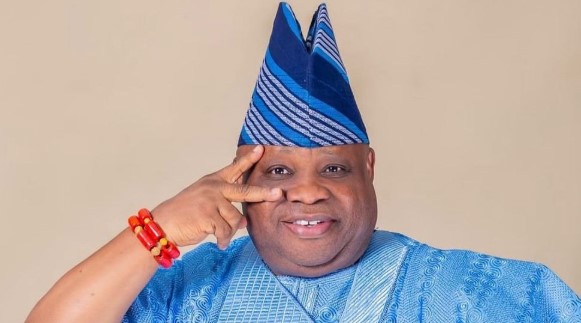
Governor Ademola Adeleke has secured a second term as Osun State governor after winning the August 15 governorship election, defeating his closest challenger, Bola Oyebamiji of the All Progressives Congress (APC), across 19 of the state’s 30 local government areas.
The Independent National Electoral Commission declared Adeleke the winner after completing the collation of results from all 30 LGAs at the state collation centre in Osogbo on Sunday. The incumbent, running on the Accord Party platform, polled 511,067 votes, while Oyebamiji recorded 444,815 votes, giving Adeleke a winning margin of 66,252 votes. ADC candidate Najeem Salaam finished a distant third with 17,180 votes.
The result gives Adeleke another four years in office and represents a significant political consolidation for a governor whose first term began under the Peoples Democratic Party before he moved to Accord for the 2026 contest.
The numbers tell the clearest part of the story.
Adeleke carried 19 of Osun’s 30 LGAs, while Oyebamiji won the remaining 11. The contest was nevertheless far from a complete wipeout: the APC candidate recorded strong performances in several areas, including Irewole, where he polled 29,972 votes against Adeleke’s 10,934, and Boripe, where he secured 19,963 votes to Adeleke’s 12,448.
Adeleke, however, built the stronger statewide coalition.
His biggest gains came in areas including Ede North, Ede South, Osogbo, Iwo, Ife East, Egbedore, Oriade and Odo-Otin. In Ede North, for instance, he recorded 35,427 votes against Oyebamiji’s 10,283, while in Ede South he won 26,188 to 6,219. He also carried Osogbo, the state capital, with 36,480 votes against the APC's 30,474.
The breadth of those victories matters because Osun's election was never simply a contest between two personalities. It was also a test of whether Adeleke's first-term record, political network and campaign organisation could withstand a determined APC challenge backed by influential figures within the ruling party.
They did.
The governor's campaign had emphasised infrastructure projects, his administration's development agenda and what supporters described as improved engagement with workers and communities. The APC, meanwhile, presented Oyebamiji as an alternative and sought to make the election a referendum on Adeleke's performance in office.
The electorate ultimately gave the incumbent another mandate.
But the result also carries a warning against describing the election as an effortless victory.
Oyebamiji won 11 LGAs and came within roughly 66,000 votes of Adeleke statewide. His performance in several parts of the state shows that the APC retains a substantial electoral base and that the opposition is far from irrelevant in Osun politics.
The election itself was also not without concerns.
The European Union Support to Democratic Governance in Nigeria Election Observation Hub reported 38 security incidents and 323 electoral offences and irregularities in the 726 polling units it had monitored as of noon on Saturday. That does not invalidate the final result, but it underscores the tensions surrounding a closely watched election in which political competition remained intense.
For Adeleke, the immediate political victory is now complete. The more difficult phase begins with governing.
A second-term mandate removes the uncertainty of another election campaign, giving the governor greater room to concentrate on the issues voters will expect him to address: infrastructure, employment, public services, education, healthcare and the wider economic pressures facing households across the state.
It also raises expectations.
Winning 19 of 30 LGAs gives Adeleke a strong political platform, but it does not mean every community voted for his government. The 11 LGAs won by Oyebamiji are a reminder that Osun remains politically competitive and that the new mandate comes with an obligation to govern beyond the areas that delivered the victory.
For the APC, meanwhile, the result provides a clear indication that its strategy in Osun needs another look. The party had the backing of powerful national and state figures, yet it could not overcome Adeleke's statewide advantage. Whether it accepts the result, challenges aspects of the election or begins preparing for the next political battle will shape the opposition's position in the state.
The election also offers an early political signal ahead of Nigeria's 2027 general elections. Osun has once again demonstrated that local political structures, incumbency, candidate popularity and voter sentiment can combine in ways that national party calculations do not always predict.
For Adeleke, the message from the ballot box is unmistakable: Osun voters have given him another four years. Now comes the harder task of turning a decisive electoral victory into a second term that delivers on the expectations behind it.