
2027: Wike Challenges Tinubu Supporters to Deliver Wards, LGAs and States.
Nyesom Wike says Tinubu’s supporters should prove their political value at the grassroots rather than chase campaign positions.
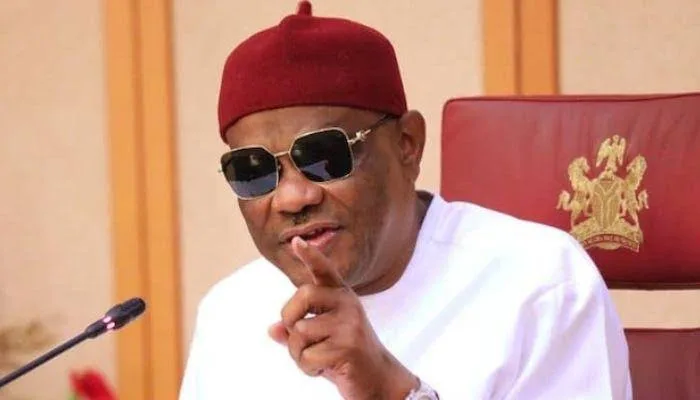
Minister of the Federal Capital Territory Nyesom Wike has urged politicians supporting President Bola Ahmed Tinubu’s 2027 re-election bid to forget the scramble for campaign titles and concentrate instead on delivering actual votes from their wards, local governments and states.
Wike made the remarks on Saturday while inspecting ongoing infrastructure projects in Abuja, where he also explained why he had no interest in becoming Director-General of Tinubu’s presidential campaign council. He argued that a senior campaign title would mean little if the person holding it could not produce electoral results in their political stronghold.
The former Rivers State governor said political influence should ultimately be measured at the polling unit rather than through appearances on television or positions on a campaign organ. In his view, anyone seeking a prominent role in the 2027 campaign should first be able to demonstrate that they can deliver their own state for Tinubu.
“Every politics is local,” Wike said, stressing that losing one's home state would undermine the relevance of even the most senior campaign appointment. He added that his preference was to remain focused on his political base and work towards victory rather than pursue a formal campaign title.
Wike also pointed to politicians who had previously occupied senior presidential campaign positions but failed to deliver their home states to their candidates, citing former Transport Minister Rotimi Amaechi, former Senate President Bukola Saraki, former Sokoto governor Aminu Tambuwal and former Plateau governor Simon Lalong among others. His examples were presented as an argument for measuring campaign leadership by electoral performance rather than status.
The minister's comments come shortly after the ruling All Progressives Congress unveiled its 2027 presidential campaign structure, with former Zamfara governor and Senator Abdulaziz Yari named Director-General. Wike had been mentioned in political speculation around the position but has consistently indicated that he does not need a formal place in the campaign council to support Tinubu.
He also reiterated that he remains a member of the Peoples Democratic Party and is not an APC member. His support for Tinubu, he said, can continue through the cross-party political arrangement he has described as the “Rainbow Coalition.” Wike said members of that coalition do not necessarily have to join the APC campaign council before working for the President's re-election.
The minister has previously used the same grassroots argument when mobilizing support for Tinubu in Rivers State. In May, he told supporters that television appearances would not deliver elections, urging them instead to work at polling units, wards and local government areas. He also argued that Rivers had benefited significantly from Tinubu's administration and should continue supporting the President.
For Wike, infrastructure has become another part of that political argument. During Saturday's inspection, he pointed to projects including the Apo-Karshi Road and the 14-kilometre Bwari-Kubwa Satellite Town access road as examples of what he described as tangible evidence of government performance. He said several major FCT projects could be completed and commissioned before the 2027 election.
That emphasis reflects a broader strategy in which Wike has argued that campaign messages should be built around completed projects rather than promises. His position is that voters should be shown what governments have actually delivered, making infrastructure and visible development part of the case for Tinubu's return to office.
The political calculation is straightforward but demanding. Nigeria's 2027 presidential election will ultimately be decided by votes cast across thousands of polling units, not by the number of prominent names attached to a campaign council. But turning political influence into votes requires organization, local alliances and sustained grassroots mobilization, precisely the areas where rival parties and emerging opposition coalitions will also be competing.
Wike's message therefore points to an increasingly practical phase of the 2027 contest. With the APC's formal campaign machinery now taking shape, the next question is not simply who gets which title, but who can actually translate political networks into votes. For Tinubu's supporters, Wike's challenge is clear: forget the prestige of the campaign office and deliver the polling units, wards, local governments and states.