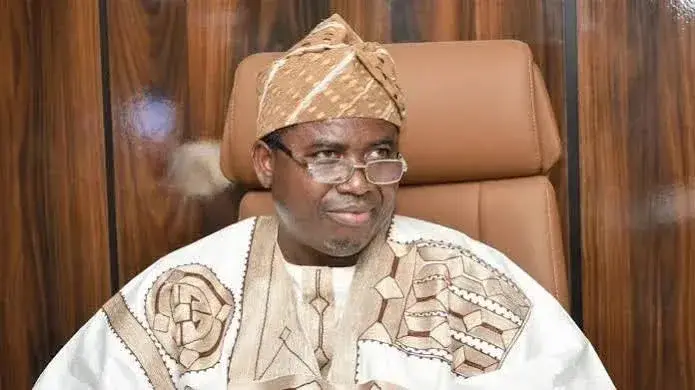
Professor Joash Amupitan SAN, Chairman of the Independent National Electoral Commission (INEC), has asked Nigerians to trust his leadership to deliver free, fair, and credible general elections in 2027.
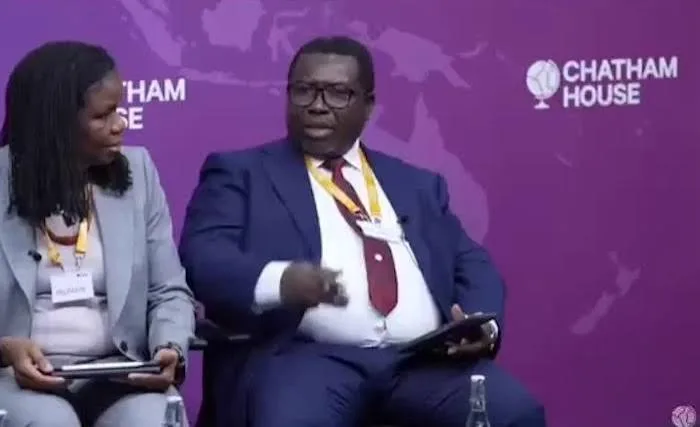
Speaking on Thursday at Chatham House in London, Amupitan addressed the lingering public skepticism that followed the 2023 general elections. The high-level dialogue, held in partnership with the Kimpact Development Initiative (KDI), focused on the theme, "Nigeria’s 2027 Elections: Democratic Trajectory and Regional Stability Beyond the Ballot."
Amupitan openly acknowledged the credibility challenges facing the electoral umpire, noting that resolving the public trust deficit remains the commission's most urgent institutional priority.
Rebuilding Credibility After 2023 Trust Deficit
Addressing the fallout from the previous presidential ballot, Amupitan conceded that administrative and technical glitches damaged public confidence across Nigeria.
"First and foremost, let me speak about what happened in 2023, which resulted in a significant trust deficit for INEC—damage so large that the Commission has not yet fully recovered from it," Amupitan stated.
The INEC chairman explained that the commission used subsequent off-cycle elections as field laboratories to identify operational vulnerabilities. He stressed that administrative reviews helped staff correct accreditation, voting, and result-management workflows ahead of the nationwide 2027 polls.
New Technical Safeguards for IReV Results
Amupitan revealed that comprehensive post-2023 audits traced the most severe result-management breakdowns to ward and local government collation centres, rather than polling units.
To prevent manipulation, INEC engineered an automated technical lock for the INEC Result Viewing Portal (IReV). Under the revised architecture, inaccurate polling-unit returns or entries reflecting over-voting will be blocked automatically at the upload stage.
"In 2023, there were instances of inaccurate results or results with over-voting being uploaded onto IReV," Amupitan told the London audience. "We have now devised a technical safeguard: if a result is not accurate at the polling unit, it will not go to IReV at all. The moment a result appears on IReV, citizens can trust what they see."
He added that eliminating discrepancies directly at the polling unit turns physical collation into a transparent verification formality. To validate these systems publicly, Amupitan announced that INEC will conduct a nationwide mock accreditation and voting exercise on November 28, 2026.
Off-Cycle Improvements and Institutional Neutrality
Defending the commission’s track record, Amupitan pointed to measurable gains during recent off-cycle governorship elections in Anambra, Osun, and Ekiti, as well as the Federal Capital Territory Area Council elections and 16 legislative by-elections.
In several of those contests, the commission announced final winners the day after voting without systemic transmission failures.
Amupitan also addressed questions regarding his neutrality as electoral umpire, following past legal representations in election disputes. He emphasised that private legal practice has no bearing on his constitutional obligations.
"My loyalty is solely to the Constitution of the Federal Republic of Nigeria and the Electoral Act," Amupitan affirmed.
Legal Battles and Strict Judicial Compliance
The INEC chairman highlighted persistent pre-election litigation as a major logistical hurdle for election management in Nigeria.
Amupitan disclosed that more than 300 pre-election lawsuits are currently pending against the commission. He reiterated that INEC remains strictly bound by court judgments under Section 285 of the Nigerian Constitution, especially verdicts delivered by the Supreme Court.
Responding to inquiries regarding former Vice President Atiku Abubakar's eligibility amid disputes over the leadership of the African Democratic Congress (ADC), Amupitan stressed that the commission will comply fully with judicial directives regardless of political sensitivities. He urged political actors and the courts to resolve disputes well ahead of election timelines to safeguard operational planning.