
2027: Obi Launches Campaign With ‘Production First’ Agenda, Says Nigeria Can Work
Peter Obi has formally launched his 2027 presidential campaign in Onitsha, promising to make production, jobs, security and investment central to his bid to rebuild Nigeria and urging rival candidates to face voters and defend their records.
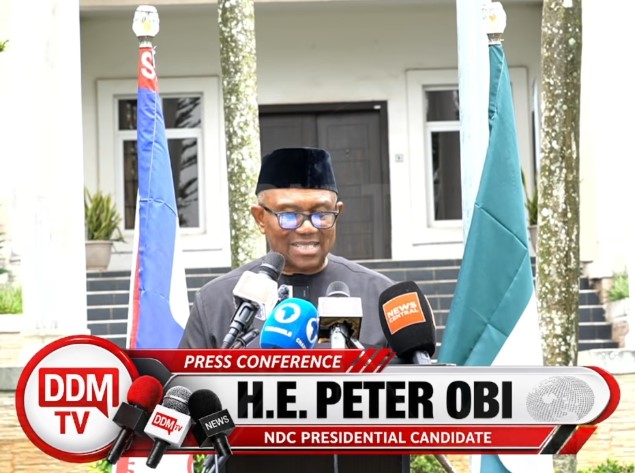
Peter Obi, presidential candidate of the Nigeria Democratic Congress (NDC), has formally opened his campaign for the 2027 presidential election, using the occasion to present a “production first” vision for Nigeria and argue that the country can overcome its economic and social difficulties with a different approach to governance.
Obi spoke on Friday at a press conference at his residence in Onitsha, Anambra State, as the presidential and National Assembly campaign season gathered momentum following the formal opening of campaigns on August 19.
The former Anambra governor said the central question before Nigerians in 2027 should not simply be which politician can win an election, but which candidate has the competence, record and ideas to address the country's problems. He called on presidential contenders to appear before Nigerians, explain their programs and subject their records to public scrutiny rather than relying on political proxies and surrogates.
For Obi, the economic argument sits at the centre of that challenge. His “production first” agenda seeks to move Nigeria away from an economy heavily dependent on imported goods and towards one that produces more of what its citizens consume, creates jobs and builds domestic value.
The approach is aimed at addressing several problems that have become increasingly difficult for Nigerian households and businesses, including rising living costs, unemployment, insecurity and weak purchasing power. Obi's argument is that economic recovery cannot depend primarily on short-term or reactive measures; Nigeria needs to build productive capacity and invest in its people.
“Economy that works” was one of the themes running through his address, with Obi arguing that Nigeria must create an environment where investment, innovation and enterprise can flourish. He said the country needs more than reactive reforms and must instead pursue policies that place citizens and productive economic activity at the centre of government.
Agriculture, manufacturing and job creation form important parts of that broader philosophy. The production-first argument is based on the premise that Nigeria's enormous human and natural resources should generate more domestic value instead of leaving the country dependent on foreign goods and vulnerable to external economic shocks.
But Friday's campaign launch was not limited to economics. Obi said his administration would give attention to security, poverty and hunger, education and healthcare, while pursuing policies designed to improve the living conditions of Nigerians, particularly vulnerable citizens.
Security is particularly significant because Obi's economic plans depend on creating conditions in which farmers, manufacturers, traders and other businesses can operate safely. A production-driven economy cannot expand sustainably where insecurity prevents people from farming, disrupts supply chains or discourages investment.
Education and healthcare also feature prominently in his campaign message. Obi has argued that Nigeria's human capital must be treated as an investment rather than an expense, particularly at a time when a large young population is entering an economy already struggling to provide sufficient employment opportunities.
He also presented his campaign as an opportunity for a wider national conversation. According to Obi, he and his running mate, Rabiu Kwankwaso, come from different backgrounds and have different political experiences, but share the objective of improving the living conditions of Nigerians.
That partnership will now come under closer scrutiny as the campaign progresses. Obi and Kwankwaso previously emerged from an opposition effort aimed at challenging President Bola Tinubu with a more unified political front, but their eventual move into the NDC helped deepen the fragmentation of the opposition field. Reuters reported earlier this year that their departure from the ADC-led coalition complicated efforts to consolidate the opposition behind a single challenger to Tinubu.
The political environment surrounding Obi's campaign is therefore considerably different from the one he faced in 2023. He finished third in that election and has since moved from the Labour Party into a new political platform, while President Tinubu is seeking a second term and former Vice President Atiku Abubakar remains another major opposition contender. Reuters has described the 2027 contest as increasingly fragmented, raising the possibility that opposition vote-splitting could again become a major factor.
For Obi, however, Friday's message was less about the mechanics of political alliances and more about forcing the election into a contest over records and policy.
He urged Nigerians to scrutinize the credentials, ideas and proposals of everyone seeking their votes and suggested that the campaign period should become a national conversation about the direction of the country. That puts pressure on all major candidates to explain not only what they want to change, but how they intend to deliver those changes.
The significance of Obi's “production first” message will ultimately depend on how detailed and financially credible the program becomes as the campaign unfolds. Moving Nigeria from consumption towards production would require sustained improvements in electricity, transport, security, access to affordable finance, infrastructure and the business environment. It would also require policies that can survive beyond the electoral cycle.
But the political appeal of the message is straightforward. At a time when many Nigerians are struggling with the cost of living and questioning whether economic reforms are improving their daily lives, Obi is offering a different measure of progress: how much the country produces, how many people it employs and how much value it creates for itself.
Friday's launch therefore marks more than the formal beginning of another presidential campaign. It is Obi's attempt to make the 2027 election a referendum on how Nigeria should be governed and what kind of economy it should become. His central proposition is that Nigeria has the resources and people to work, but needs leadership capable of turning those resources into production, opportunity and a better standard of living. The months ahead will determine whether that argument can translate into a nationwide political movement strong enough to challenge the established order.